
Ssaghwacha and Sipjeondaebochat, What's the Difference? — The Story of Nine-Steaming-Nine-Drying Nourishing Teas
When Ssaghwacha and Sipjeondaebochat are listed side-by-side on a teahouse menu, one tends to pause. The names are different, but the descriptions are similar, and the prices are usually the same. There are beverages named 'Ssanghwa' on display, and medicines named 'Ssanghwatang' in pharmacies.
There's a reason for the confusion. Both names come from centuries-old Korean medicine prescriptions, and a significant portion of the medicinal ingredients in the prescriptions overlap. However, today, items sold under these names can be either medicines or foods. Even with the same name, they belong to entirely different legal categories. The clarification begins with their original sources.
What Does Ssanghwa (雙和) Combine?
Ssanghwatang (雙和湯) is recorded in the "Miscellaneous Diseases" (雜病篇), "Deficiency and Fatigue" (虛勞) section of 『Donguibogam』. Ssanghwa means 'to harmonize two things together,' and here, the two refer to yin and yang (陰陽) or qi and blood (氣血). Ancient texts described the nature of this prescription as nourishing both yin and yang (兩補陰陽) and benefiting qi and blood (益氣補血).
It consists of seven ingredients. White Peony Root (백작약) is the most abundant at 2.5 jeon, followed by Rehmanniae Radix Preparata (숙지황), Astragali Radix (황기), Angelicae Gigantis Radix (당귀), and Cnidii Rhizoma (천궁) at 1 jeon each, and Cinnamomi Cortex (계피) and Glycyrrhizae Radix et Rhizoma (감초) at 7.5 pun each. To this, 3 slices of ginger and 2 jujubes are added and decocted in water. The fact that White Peony Root alone is two and a half times the amount of each of the other individual ingredients determines the character of this prescription. It is structured with one ingredient as the core and the others supporting it.
The texts record that this prescription was used for states of mental and physical fatigue with simultaneous damage to qi and blood, and for states of qi deficiency and sweating after a major illness. However, this is a description from ancient texts regarding herbal medicine prescriptions that are medicinal products, not an explanation for teas sold in teahouses today. This distinction will be discussed again later.
What Are the Ten (十全) in Sipjeon?
The origin of Sipjeondaebotang (十全大補湯) goes back further. It was recorded in Volume 5 of 『태평혜민화제국방(太平惠民和劑局方)』 (Formularies of the Bureau of Taiping Benevolent Prescriptions for the People), an officially compiled prescription collection from the Song Dynasty in China, and subsequently included in various Korean medical texts. Sipjeondaebo means 'fully equipped with ten things.'
The ten ingredients have a lineage. Combining Samultang (四物湯), which addresses blood (血) (Rehmanniae Radix Preparata, White Peony Root, Angelicae Gigantis Radix, Cnidii Rhizoma), and Sagunjatang (四君子湯), which addresses qi (氣) (Ginseng, Atractylodis Rhizoma Alba, Poria, Glycyrrhizae Radix et Rhizoma), results in Palmultang (八物湯). Adding Astragali Radix and Cinnamomi Cortex to this makes Sipjeondaebotang. The ten ingredients are added in equal proportions, along with 3 slices of ginger and 2 jujubes, and decocted.
In other words, Sipjeondaebotang is a prescription created by addition. Two lineages were combined entirely, and two more ingredients were added. The texts recorded its application for states where both qi and blood are deficient, and where spirit, qi, and blood (精神氣血) are significantly depleted due to prolonged illness or overwork.
Seven Overlapping, Two Diverging Points
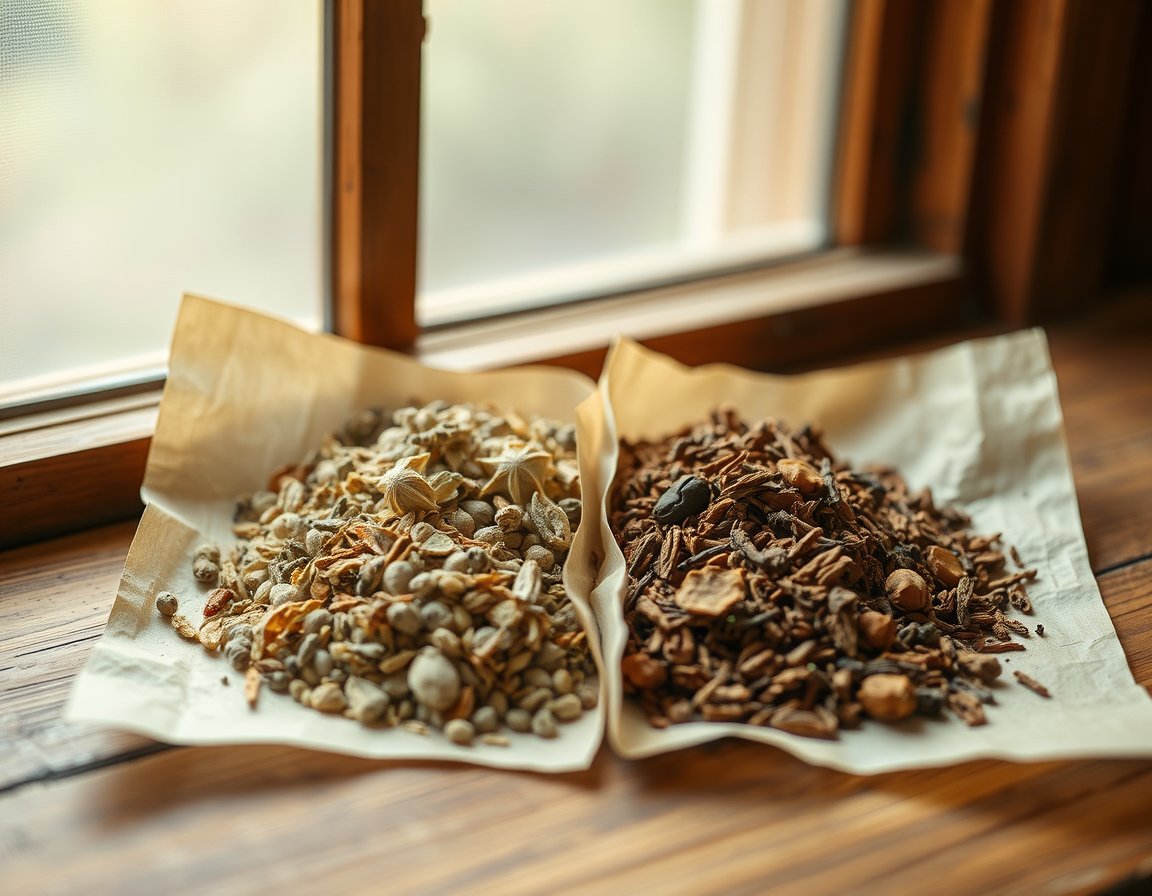
When the two prescriptions are placed side-by-side, many medicinal ingredients overlap. Four ingredients from Samultang—Rehmanniae Radix Preparata, White Peony Root, Angelicae Gigantis Radix, and Cnidii Rhizoma—plus Astragali Radix, Cinnamomi Cortex (육계), and Glycyrrhizae Radix et Rhizoma make a total of seven common ingredients. The three ingredients present in Sipjeondaebotang but not in Ssanghwatang are Ginseng, Atractylodis Rhizoma Alba, and Poria, which are the components from Sagunjatang.
The differences lie in two areas. First is the ratio. In Ssanghwatang, White Peony Root is overwhelmingly abundant, with the others supporting it. Sipjeondaebotang uses all ten ingredients in equal proportions. Second is the scope. This refers to whether it contains seven or ten ingredients, and whether the Sagunja lineage is included or not.
The flavor profiles also diverge here. Ssanghwa-type preparations, rich in White Peony Root, have a background of sour and astringent tastes, with the scent of cinnamon prominent. Sipjeon-type preparations, containing Ginseng, Atractylodis Rhizoma Alba, and Poria, have a thicker, savory aroma closer to an earthy scent.
Ssanghwatang from Pharmacies and Ssaghwacha from Teahouses Are Different Products
Even if the names are similar, their legal categories are different.
The Ministry of Food and Drug Safety (식품의약품안전처) Notification 「한약(생약)제제 등의 품목허가·신고에 관한 규정」(Regulations on Product Approval and Reporting for Herbal (Crude Drug) Preparations, etc.) designates 『Donguibogam』, 『Bangyak Hapyeon』, 『Hyangyak Jipseongbang』, etc., as 'herbal medicine texts.' When applying for product approval for prescriptions recorded in herbal medicine texts, their original source must be stated. Ssanghwatang sold in pharmacies falls into this category. As a medicinal product, its approved efficacy and effects are displayed, and a warning to consult a doctor or pharmacist before consumption is attached.
On the other hand, Ssaghwacha and Sipjeondaebochat sold in teahouses or online are foods. Article 8, Paragraph 1 of the 「식품 등의 표시·광고에 관한 법률」(Act on Labeling and Advertising of Foods, etc.), which came into effect on July 3, 2024, prohibits labeling or advertising that may lead to the perception that food has efficacy in preventing or treating diseases (Clause 1) and labeling or advertising that may lead to the perception that food is a medicinal product (Clause 2). This provision is the basis for why tea, as a food, cannot claim to be "good for something."
JAIMDANG's nine-steaming-nine-drying Ssaghwacha and Sipjeondaebochat are also foods that fall into this category. They can be ordered from a smart store without a prescription, and their category is different from herbal medicines dispensed after a Korean medicine doctor's diagnosis and prescription. One should not be considered a substitute for the other.
What It Means to Steam Nine Times and Dry Nine Times
Gujeung-gupo (九蒸九曝), or nine-steaming-nine-drying, is a processing method of steaming nine times and drying in the sun nine times. Rehmanniae Radix Preparata (熟地黃), which is common to both prescriptions, is a prime example. Rehmanniae Radix Preparata is not the raw medicinal ingredient as harvested, but the name of the processed product. Dried Rehmannia root is called Rehmanniae Radix (건지황), and Rehmanniae Radix Preparata is made by repeatedly steaming and drying it until it turns dark reddish-brown. 『Donguibogam』 describes a method of soaking it in fresh Rehmannia juice, then sprinkling it with yellow wine (황주) or similar alcohol while steaming it nine times and drying it in the sun nine times.
There are data measuring what changes. A study published in Volume 33, Issue 10 of 『한국식품영양과학회지』 (Journal of the Korean Society of Food Science and Nutrition) in 2004 analyzed components while increasing the number of steaming cycles from 1 to 9. 5-HMF (5-hydroxymethyl-2-furfural), which was not detected in Rehmanniae Radix, appeared with steaming and gradually increased with the number of cycles, significantly rising at the 7th cycle. In terms of sugars, sucrose disappeared after steaming, and fructose and glucose significantly increased. This is the background for its sweet taste even after prolonged brewing.
There are also changes in the opposite direction. A review paper on processing methods published in Volume 9, Issue 1 of 『한약정보연구회지』 (Journal of Korean Herbal Medicine Information) in 2021 summarized that catalpol, a marker compound of Rehmannia, decreases to 1/20 to 1/30 of its original level during the processing. The same paper also pointed out that the 「대한민국약전」(the Korean Pharmacopoeia) stipulates that Rehmanniae Radix Preparata must contain 0.1% or more of 5-HMF. This means that Rehmanniae Radix Preparata is not a process that preserves the original components, but rather a process that changes the component composition.
The authors also clearly stated limitations. Ancient texts do not clearly specify the temperature, time, and amount of auxiliary ingredients, making it difficult to reproduce exactly, hence the need for standardization of the processing method. The term 'nine-steaming-nine-drying' itself does not guarantee quality; rather, the conditions under which it was steamed, more than the number of times it was steamed, determine the outcome.
JAIMDANG's Ssaghwacha and Sipjeondaebochat also follow this process. As it is a labor-intensive process, recording and controlling the conditions become crucial. This is in the same context as JAIMDANG operating batch-specific quality inspections and lot number tracking at its off-site herbal medicine preparation facility (원외탕전실) in Paju, Gyeonggi Province. The procedures are summarized in the article [Off-site Herbal Medicine Preparation Facility and Herbal Medicine Quality](/en/journal/wonoe-tangjeon-quality).
Four Things to Check Before Choosing
- Check the 'Food Type' on the packaging — If it's labeled as an infused tea or liquid tea, it's food. If it's a medicinal product, it will have a separate 'General Medicine' label and sections for efficacy and effects.
- Count the number of ingredients listed — Ssanghwa-type products typically have seven ingredients, and Sipjeon-type products have ten. Since there may be additions or subtractions depending on the product, check the label.
- Check the sugar content — Sweeteners may be added to liquid products. Refer to the sugar content item in the nutritional information label.
- Do not confuse it with prescribed herbal medicine — If you are pregnant, breastfeeding, or undergoing treatment, it is safer to inform and consult your healthcare provider, even for tea which is a food product.
References
- The Academy of Korean Studies (한국학중앙연구원), 「쌍화탕(雙和湯)」, 『한국민족문화대백과사전』 (Encyclopedia of Korean Culture)
- The Academy of Korean Studies (한국학중앙연구원), 「십전대보탕(十全大補湯)」, 『한국민족문화대백과사전』 (Encyclopedia of Korean Culture)
- Lee, Jong-Ki & Seo, Jeong-Mi, 「숙지황 제조과정에 따른 성분함량 변화」 (Changes in Component Content According to the Manufacturing Process of Rehmanniae Radix Preparata), 『한국식품영양과학회지』 (Journal of the Korean Society of Food Science and Nutrition) 33(10), 2004
- Jeong, Yu-Seong & Kim, Tae-Yang & Kang, Young-Min, 「숙지황 포제법의 표준화 및 현대화 필요성에 관한 소고」 (A Study on the Necessity of Standardization and Modernization of the Processing Method for Rehmanniae Radix Preparata), 『한약정보연구회지』 (Journal of Korean Herbal Medicine Information) 9(1), 2021
- Ministry of Government Legislation (법제처), 「식품 등의 표시·광고에 관한 법률」 제8조(부당한 표시 또는 광고행위의 금지) (Article 8 (Prohibition of Unfair Labeling or Advertising) of the Act on Labeling and Advertising of Foods, etc.), National Law Information Center (국가법령정보센터)
- Ministry of Food and Drug Safety (식품의약품안전처), 「한약(생약)제제 등의 품목허가·신고에 관한 규정」 (Regulations on Product Approval and Reporting for Herbal (Crude Drug) Preparations, etc.), National Law Information Center (국가법령정보센터)
*JAIMDANG's nine-steaming-nine-drying Ssaghwacha and Sipjeondaebochat are food products (traditional teas), not medicinal products, and are not intended for the prevention or treatment of diseases. The citations from original texts in this article are explanations of herbal medicine prescriptions recorded in Korean medicine literature and do not imply the efficacy of tea as a food product. The decision to consume herbal medicine is made through a Korean medicine doctor's diagnosis and prescription. Individuals who are pregnant or undergoing treatment for specific conditions are advised to consult their healthcare provider before consumption.*
jaimdang Korean Herbal Care
Online consultation and prescriptions tailored to your constitution.
View products