
Difficult Nights to Sleep, Korean Medicine Views 'Heart Fire (心火)' — The Story of Cheongsimsan
You turn off the lights and lie down, but your mind becomes clearer. Words spoken during the day, tasks to handle tomorrow, and worries difficult to pinpoint reasons for, all come to mind. Even if you manage to fall asleep, you wake up around 3 AM and it takes an hour to fall back asleep. In the morning, you wake up feeling as if you haven't slept at all.
If such nights only last a few days, it's a passing matter. The problem arises when it repeats. We've organized, in order, how insomnia is categorized into types, what international clinical guidelines recommend first, and how Korean medicine views sleep.
Sleepless Nights Also Have Types
The single phrase "cannot sleep" encompasses different situations. There are broadly three categories:
- Sleep Onset Insomnia — Cases where it takes a long time to fall asleep after lying down
- Sleep Maintenance Insomnia — Cases of frequent waking during the night and difficulty falling back asleep after waking
- Early Morning Awakening — Cases of waking much earlier than desired and staying awake until morning
It is difficult to apply the same approach to someone who takes two hours to fall asleep and someone who wakes up every dawn.
Duration also serves as a criterion. If sleep problems persist for more than 3 months, it is considered chronic insomnia. Domestic data reports that 33~50% of adults experience it at least once, and the global prevalence is estimated to be at least 10% or more. The rate of progression to chronicity is 45~75%, and the relapse rate after recovery is 12~33%.
What Guidelines Prioritize First Is Not Medication
Many people find this surprising, but all international clinical guidelines for insomnia recommend Cognitive Behavioral Therapy for Insomnia (CBT-I) as the first-line choice.
CBT-I consists of three pillars:
- Behavioral — Stimulus control therapy (using the bed only for sleeping), sleep restriction therapy (matching time in bed to actual sleep time), muscle relaxation
- Cognitive — A process of re-examining excessive worries and distorted beliefs about sleep
- Educational — Lifestyle adjustments centered on sleep hygiene
Sleep hygiene is a commonly misunderstood aspect. Sleep hygiene is not a complete method but an element of CBT-I. While reducing light and avoiding caffeine alone may not resolve chronic insomnia, it provides the foundation for other elements to work. In terms of short-term effects, CBT-I is not inferior to pharmacotherapy, and it is reported to be better than medication for problems with falling asleep.

Sleeping Pills and the '4-Week' Line
Nevertheless, sleeping pills are often the first choice. There is an explicit guideline for this.
The 「의료용 마약류 졸피뎀 안전사용 기준」(Safety Use Standards for Medical Narcotics Zolpidem), distributed by the Ministry of Food and Drug Safety (식품의약품안전처) in 2020 after approval by the Narcotics Safety Management Deliberation Committee (마약류안전관리심의위원회), stipulates the following:
- Treatment duration should be as short as possible, not exceeding 4 weeks
- For immediate-release formulations, do not prescribe more than 10mg per day
- Do not use in individuals under 18 years of age
- Use with caution as it may cause abuse or dependence
The situation is similar for benzodiazepine-class drugs. Pharmacotherapy is well-suited for short-term insomnia within 4 weeks, and for chronic insomnia, side effects, withdrawal symptoms, and contraindications must be weighed together, according to a domestic review.
The remaining question is not 'whether or not to take medication.' It is what the next step should be if sleep problems have not resolved after 4 weeks.
Korean Medicine Views Insomnia as 'Heart Fire (心火)'
Korean medicine explains sleep as a state where the Heart (心) stores the Spirit (神). A representative form of this imbalance is Heart Fire Ascending (心火亢進) — a state where heat rising upwards cannot calm the Spirit, leading to a tired body but a clear mind. Complaints of having many thoughts when lying down fall into this category. Another is Disharmony between Heart and Kidney (心腎不交), which is viewed as a state where the upward and downward circulation between the Heart Fire (心火) above and Kidney Water (腎水) below is interrupted. Patterns such as frequent waking during the night or cold hands and feet with a flushed face are interpreted through this framework. Since 『동의보감』 (Donguibogam) compiled content related to sleep in the 'Dream (夢)' chapter of the Naegyeongpyeon (Internal Medicine section), categories such as Ansin (安神, calming the spirit), Cheongsim (淸心, clearing heart fire), and Gyotongsimsin (交通心腎, harmonizing heart and kidney) have emerged from this.
These names are not disease diagnoses but frameworks for categorizing body conditions. Even for the same insomnia, the approach differs depending on which framework it falls into.
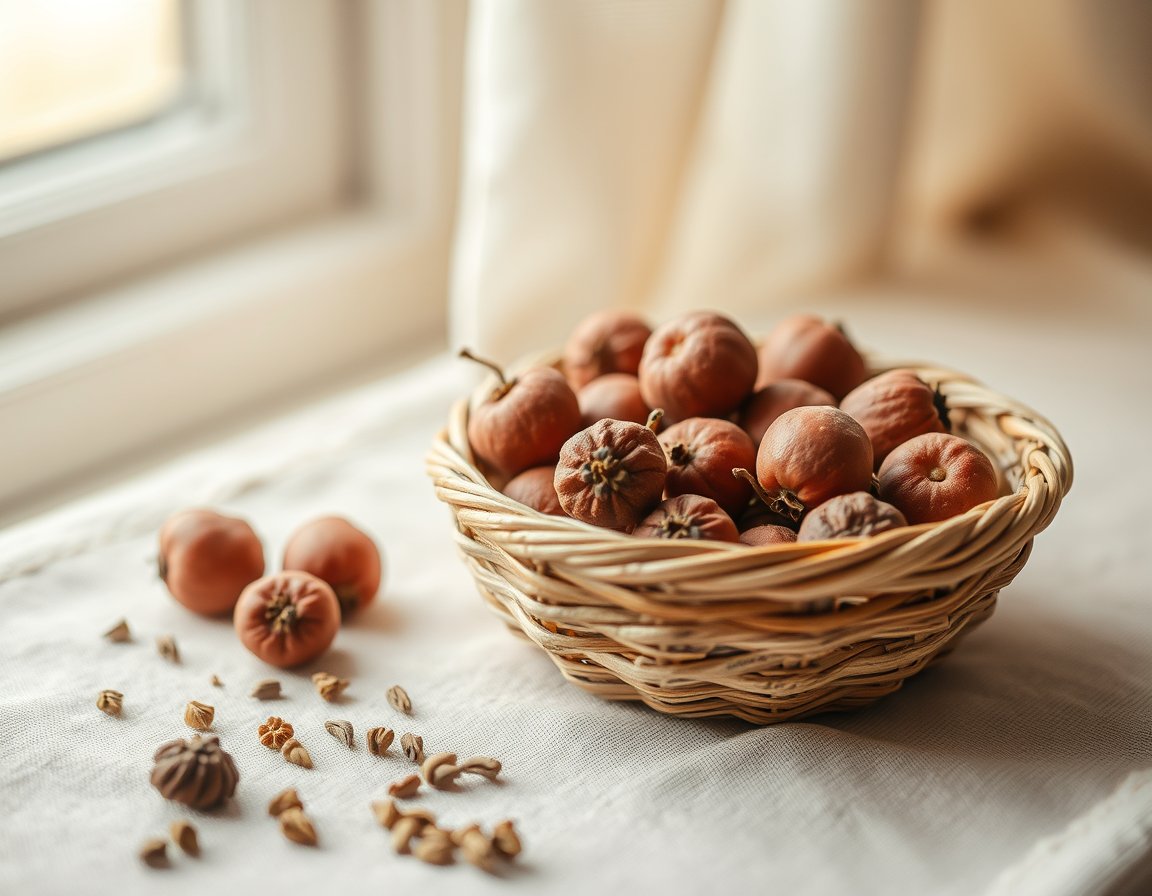
The most researched herb in the Ansin (安神) category is Ziziphus jujuba seed (酸棗仁). A double-blind, placebo-controlled, crossover clinical trial published in 『Complementary Therapies in Medicine』 in 2021 involved 12 participants with a 4-week administration, 4-week washout, and 4-week crossover design. A statistically significant difference compared to placebo was reported in the Pittsburgh Sleep Quality Index (PSQI) (p=0.046). However, the authors themselves defined this as a feasibility study. 12 participants is not a sufficient sample size to draw definitive conclusions.
There is also a systematic review on Suanzaoren decoction (酸棗仁湯). A 2013 review in 『BMC Complementary and Alternative Medicine』 examined 12 RCTs, totaling 1,376 participants. While many individual studies reported positive results, the review authors' conclusions were cautious. This was because the methodological quality of all included trials was below 3 out of 8 points, none of the studies implemented allocation concealment, and there were no placebo-controlled studies. The authors wrote that the evidence is insufficient and large-scale, well-designed RCTs are needed.
Regarding ingredients, substances like spinosin and jujuboside A are reported to be involved in the GABAergic and serotonergic systems. While there are other herbs classified in the same category, such as Platycladi Semen (백자인), human-targeted open studies are concentrated on Ziziphus jujuba seed. Data suggesting a direction is accumulating, but it is not yet sufficient evidence to draw definitive conclusions.
The Place of Cheongsimsan
Cheongsimsan (淸心散) is a Korean medicine prescription formulated directly by jaimdang clinic based on the Ansin (安神) prescription lineage from 『동의보감』 (Donguibogam) and 『황제내경』 (Huangdi Neijing).
Its composition follows the principle of Jun-Shin-Jwa-Sa (君臣佐使, Sovereign, Minister, Assistant, Envoy). It combines layers of herbs that reduce heat, such as Gypsum Fibrosum (석고), Coptidis Rhizoma (황련), and Scutellariae Radix (황금); herbs that calm excitement, such as Gardeniae Fructus (치자), Paeoniae Radix Alba (백작약), and Anemarrhenae Rhizoma (지모); and herbs that support the foundation, such as Codonopsis Radix (당삼), Asini Corii Colla (아교), and Glycyrrhizae Radix et Rhizoma (감초). This composition places more emphasis on clearing heat (淸熱) rather than prioritizing the Ziziphus jujuba seed category, corresponding to the Heart Fire perspective mentioned earlier.
Preparation takes place at the off-site herbal dispensary in Paju, Gyeonggi Province. Marker compounds of standardized herbs are quantified by HPLC, decocted using a standardized process with controlled temperature, time, and pressure, and then undergo batch-specific quality control. Each pouch is labeled with a lot number, allowing traceability of previous steps. The process is detailed in the article [Off-site Herbal Dispensary and Herbal Medicine Quality](/en/journal/wonoe-tangjeon-quality).
Whether and for how long to take it is determined after consultation and review by a Korean medicine doctor. Those taking sleeping pills or other medications must inform us during the consultation. The procedure is outlined in [Non-face-to-face Hanbang Prescription Guide](/en/journal/bidaemyeon-hanyak-guide).
Four Things to Prepare Before Consultation
Regardless of how you seek help, preparing the following four things in advance will speed up the conversation:
- Count the duration — How many times a week, for how many months. 3 months is a key turning point.
- Distinguish the type — Is it difficulty falling asleep, waking up in the middle of the night, or waking too early? Even 2 weeks of recording can reveal the pattern.
- Check if wake-up time is consistent — The consistency of wake-up time is the reference point for rhythm, more so than bedtime.
- List everything you are taking — Including sleeping pills, antihistamines, and health functional foods, exactly as they are.
References
- Lee Eun, 「불면증의 인지행동치료」(Cognitive Behavioral Therapy for Insomnia), 『대한의사협회지』 (Journal of the Korean Medical Association) 63(8):477-483, 2020
- Cho Jae-wook et al., 「디지털 헬스케어 시대의 불면증 치료: 현재와 미래」(Insomnia Treatment in the Era of Digital Healthcare: Present and Future), 『Journal of Sleep Medicine』 20(2):81-90, 2023
- Ministry of Food and Drug Safety (식품의약품안전처), 「의료용 마약류 졸피뎀 안전사용 기준」 (Safety Use Standards for Medical Narcotics Zolpidem), 2020
- Shergis JL et al., Medicinal seeds Ziziphus spinosa for insomnia: a randomized, placebo-controlled, cross-over, feasibility clinical trial, 『Complementary Therapies in Medicine』, 2021
- Xie CL et al., Efficacy and safety of Suanzaoren decoction for primary insomnia: a systematic review of randomized controlled trials, 『BMC Complementary and Alternative Medicine』 13:18, 2013
*This article is intended to provide information on sleep and the Korean medicine perspective, and does not guarantee the diagnosis or treatment efficacy of specific diseases. Cheongsimsan is a Korean medicine doctor's prescription, and its use is determined through consultation and prescription by a Korean medicine doctor; individual responses may vary. If sleep problems persist, consultation with a medical institution is necessary.*
jaimdang Korean Herbal Care
Online consultation and prescriptions tailored to your constitution.
View products