
Monthly Recurring Menstrual Pain: A Korean Medicine Perspective
The lower abdomen feels heavy the day before menstruation begins. On the first morning, the pain spreads to the lower back and inner thighs, and I wait curled up for 30 minutes after taking painkillers. Meetings are postponed until the afternoon, and on months when the medication doesn't work, the entire day is written off.
Even though these days return every month, they are often dismissed with the phrase, "It's just how it is." In reality, that's not the case. Menstrual pain has different categories, and each category requires different checks. There are also specific signals that should not delay examination.
Even if it's the same menstrual pain, the categories differ
In medicine, menstrual pain is divided into two categories:
- Primary dysmenorrhea — Pain that occurs with the menstrual cycle without clear pelvic lesions.
- Secondary dysmenorrhea — Cases where there is an underlying causative disease, such as endometriosis, adenomyosis, or uterine fibroids.
Seoul National University Hospital Medical Information describes dysmenorrhea as a symptom experienced by approximately 50% of women of reproductive age. Primary dysmenorrhea usually starts a few hours before or just at the onset of menstruation, lasts 2-3 days, and can be accompanied by nausea and vomiting.
The scale of domestic surveys is larger. In the 「한국 여성의 생애주기별 성·생식건강조사」(Korean Women's Life Cycle Sexual and Reproductive Health Survey) conducted in 2022 on 961 adolescents and 2,137 adults, the experience rate of dysmenorrhea was 76.5% for adolescents and approximately 77% for adults. The proportion experiencing severe menstrual pain with a pain scale (VAS) of 7 points or higher was 42.6% for adolescents and 41.6% for adults.
However, the rate of seeking medical care remains low. Only 9.9% of adolescents and 28.5% of adults who experienced severe menstrual irregularities visited a hospital or clinic. The top reason for adolescents not visiting a hospital was "it can be controlled with painkillers" (38.9%).
Prostaglandin: The substance that causes pain
The mechanism of primary dysmenorrhea is relatively clearly understood. As progesterone levels drop at the end of the luteal phase, prostaglandin production increases in the uterine lining. This substance strongly contracts the uterine muscles, and if these contractions temporarily reduce uterine blood flow, ischemic pain occurs in that area.
The same prostaglandin also acts on the gastrointestinal tract and blood vessels. This is why some months are accompanied by diarrhea, nausea, and headaches, and why the pain does not remain confined to the lower abdomen. The pattern of pain concentrating on the first day and subsiding within 2-3 days is also explained by changes in the concentration of this substance.

Painkillers differ in 'when' they are taken
Nonsteroidal anti-inflammatory drugs (NSAIDs) inhibit the enzymes that produce prostaglandins. This means they work by reducing the production itself, rather than just masking existing pain. This is where the timing of administration becomes important.
Seoul National University Hospital Medical Information advises taking them "just before or at the onset of menstrual pain, regularly every 6-8 hours." This differs from taking one pill after the pain has reached its peak.
The strength of the evidence is also worth noting. A 2015 Cochrane Review (Marjoribanks et al.) examined 80 randomized controlled trials involving a total of 5,820 participants. The summary states that while 18% of the placebo group achieved moderate or greater pain relief, 45-53% of the NSAIDs group did. However, side effects also increased; when 10% of the placebo group experienced side effects, 11-14% of the NSAIDs group did. The authors rated the overall quality of evidence as 'low' due to inadequate reporting.
Dose, interval, and gastrointestinal burden vary greatly among individuals. The method of administration should, in principle, be determined within the guidance of a pharmacist or doctor.
Signals that should not delay examination
The problem lies with secondary dysmenorrhea. The World Health Organization states that endometriosis affects approximately 10% of women of reproductive age, totaling 190 million people, and estimates the average time to diagnosis at 4-12 years. This is the period where confirmation is delayed while enduring with painkillers.
If you fall into any of the categories below, it is better to consider an examination first:
- Pain that is not controlled even with regular use of painkillers.
- Cases where the pain clearly worsens year by year.
- Pelvic pain, dyspareunia, or defecation pain unrelated to menstruation.
- Significantly increased menstrual flow or many clots, or bleeding outside of menstruation.
- Inability to conceive for more than one year without contraception.
If secondary dysmenorrhea is suspected, you should first seek gynecological care to identify the cause. Imaging tests such as ultrasound are the starting point. This is true even if you are receiving Korean medicine treatment, as Korean medicine management does not replace a diagnosis.
Korean medicine classifies it as Blood Stasis (瘀血) and Cold Syndrome (寒證)
Korean medicine interprets menstrual pain through the framework of 'pain results from obstruction (不通則痛)'. This perspective holds that pain manifests when the flow of qi and blood in the pelvis is blocked or when the underlying foundation is insufficient.
A 2015 literature review published in a domestic academic journal compiled 16 papers from 2000-2015 to categorize the pattern identification types used for dysmenorrhea. For excess patterns, Qi Stagnation and Blood Stasis type (氣滯血瘀型) and Cold-Damp Congealing type (寒濕凝滯型) are noted, while for deficiency patterns, Qi and Blood Deficiency type (氣血虛弱型) and Liver and Kidney Deficiency type (肝腎虧損型) are included. This effectively divides the categories into Blood Stasis (stagnant flow), Cold Syndrome (cold and damp energy congealed), and Deficiency (insufficient foundation). These names are not disease diagnoses but rather frameworks for classifying body conditions.
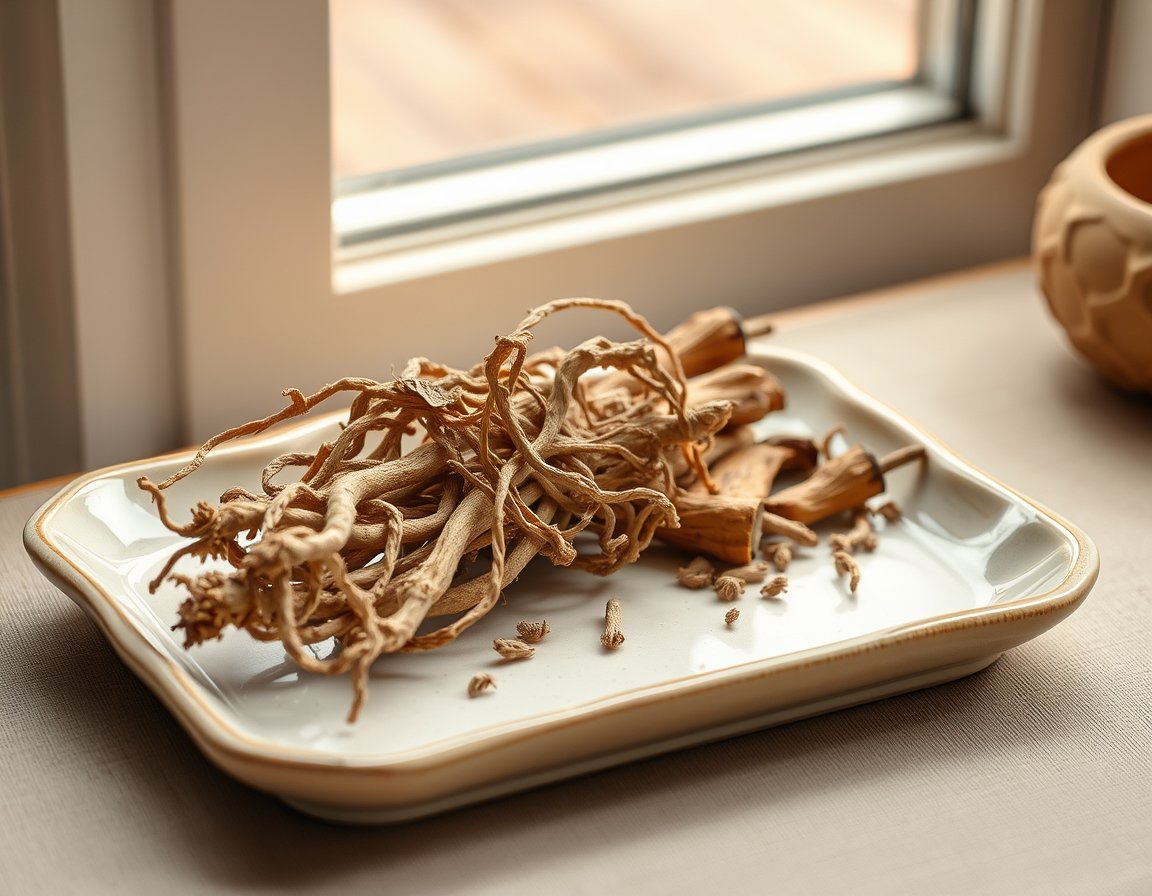
Clinical evidence for herbal medicine is still being compiled. A 2008 Cochrane Review (Zhu et al.) examined 39 randomized controlled trials involving 3,475 participants for primary dysmenorrhea and reported favorable results in pain relief compared to control groups. However, the authors explicitly stated in their conclusion that the methodological quality of the included trials was low, and that data from placebo-controlled trials were difficult to combine. This is data suggesting a direction, not a conclusion. In Korea, efforts to build evidence continue, such as the registration of a systematic review protocol for Hyulbuchukeo-tang (혈부축어탕), a Blood Stasis-related prescription, in 『BMJ Open』 in 2017 here.
Ongungbichaek (溫宮秘策) is a Korean medicine prescription directly formulated by JAIMDANG Clinic (Jaimdang Korean Medicine Clinic) according to the Gunsinjwasa (君臣佐使) principle, corresponding to the above perspective of warming the uterus and pelvis. Preparation takes place at an off-site herbal medicine preparation facility in Paju, Gyeonggi Province. Standardized herbal ingredients are quantified by HPLC for marker compounds, undergo self-inspection for heavy metals and pesticide residues, and are then decocted using a standardized process with controlled temperature, time, and pressure. After batch-specific quality control, they are packaged into stick pouches, with each pouch bearing a lot number. The process is detailed in [the off-site herbal medicine preparation facility and herbal medicine quality](/en/journal/wonoe-tangjeon-quality).
The decision to take the medication and its duration are determined through consultation and examination by a Korean medicine doctor. If you are regularly taking birth control pills or painkillers, you must inform the doctor during the consultation. The procedure is outlined in the [non-face-to-face herbal medicine prescription guide](/en/journal/bidaemyeon-hanyak-guide).
Four things to try starting this cycle
There is also a growing body of clinical data regarding lifestyle. A meta-analysis published in 『Scientific Reports』 in 2018 compiled 6 randomized controlled trials and reported that heat therapy reduced pain scores compared to no treatment. A 2019 Cochrane exercise review (12 studies, 854 participants) reported approximately a 25mm reduction on a 100mm pain scale. Both reviews rated the quality of evidence as low to very low.
- Record two or three cycles — Note the onset of pain, peak intensity (0-10 points), time of painkiller intake, and response. This will be the first data to differentiate between primary and secondary dysmenorrhea.
- Take painkillers earlier — Not after the pain has become severe, but from the moment the initial signal appears, regularly according to the advised interval.
- Maintain consistent warmth in the lower abdomen — Steadily rather than briefly multiple times. Avoid low-temperature burns by not applying directly to the skin.
- Move for about 45 minutes, 3 times a week — At a gentle intensity, such as walking, stretching, or yoga. Do not concentrate it only during the menstrual week.
Sleep and stress are also on the same line. These are factors that affect pain sensitivity and hormone rhythms, so recording sleep duration along with other notes can expedite consultation.
References
- Korea Institute for Health and Social Affairs, 「2022년 한국 여성의 생애주기별 성·생식건강조사」(2022 Korean Women's Life Cycle Sexual and Reproductive Health Survey), 2022
- Seoul National University Hospital Medical Information, 「월경통(dysmenorrhea)」(Dysmenorrhea)
- Marjoribanks J et al., Nonsteroidal anti-inflammatory drugs for dysmenorrhoea, 『Cochrane Database of Systematic Reviews』 2015 Issue 7
- Zhu X et al., Chinese herbal medicine for primary dysmenorrhoea, 『Cochrane Database of Systematic Reviews』 2008 Issue 2
- 「국내 학술지에 게재된 월경통의 진단도구 및 변증에 관한 한의학 연구 문헌고찰」(A Literature Review of Korean Medicine Research on Diagnostic Tools and Pattern Identification for Dysmenorrhea Published in Domestic Journals), 『동의생리병리학회지』, 2015
*This article is intended to provide information on menstrual pain and Korean medicine perspectives and does not guarantee the diagnosis or treatment efficacy of specific diseases. Ongungbichaek is a Korean medicine doctor's prescription, and the decision to take it is made through consultation and prescription by a Korean medicine doctor; responses may vary by individual. If pain is severe or secondary dysmenorrhea is suspected, please also seek gynecological care.*
jaimdang Korean Herbal Care
Online consultation and prescriptions tailored to your constitution.
View products