
The Reason Constipation Returns When Laxatives Are Stopped — The Story of Seboksan

At first, one pill was enough. The next month, two pills, and after about half a year, even two pills didn't bring a quiet morning. On days the medicine was skipped, the day passed with a heavy feeling in the abdomen. This is usually the point where one wonders, "Do I have to take this for life?"
Constipation is common. In the West, the prevalence is reported to be 10-15%, and in Korea, a survey indicates that 16.5% of the total population perceives themselves as constipated. As it is common, there are many unorganized stories. We have examined what the diagnostic criteria are, whether long-term use of laxatives truly damages the intestines, to what extent dietary fiber and water have evidence, and from what angle Korean Medicine views this issue.
Constipation Also Has Diagnostic Criteria
Constipation is not defined solely by "having a bowel movement every few days." The internationally used standard is Rome IV. Functional constipation is considered when two or more of the following criteria are met:
- Straining for more than one-quarter of defecations
- Hard stools (Bristol Stool Form Scale 1-2) for more than one-quarter of defecations
- Sensation of incomplete evacuation or anorectal obstruction/blockage for more than one-quarter of defecations
- Manual maneuvers (e.g., digital evacuation) to facilitate more than one-quarter of defecations
- Fewer than 3 spontaneous bowel movements per week
Time conditions are also attached. Symptoms must have started at least 6 months ago and been present for the last 3 months, soft stools without the use of laxatives should be rare, and the criteria for irritable bowel syndrome should not be met.
The reason for adhering to these criteria is that constipation is not a single entity. It includes cases where the transit speed through the colon is slow, where the expulsion action from the anus/rectum is dysfunctional, and where transit speed is normal but discomfort is significant. Different types do not respond to the same medication in the same way.
The Evidence for "Stimulant Laxatives Damage the Intestines"
The idea that long-term use of stimulant laxatives like bisacodyl and senna damages the colonic nerves, preventing them from moving on their own, is widely spread. This is known as cathartic colon. When examining the evidence, the picture is not simple.
A critical review published in 『Therapeutic Advances in Gastroenterology』 in 2024 examined this common belief. The authors concluded that there are no randomized prospective controlled studies demonstrating that senna, bisacodyl, or picosulfate cause morphological changes in human intestinal nerves or muscles. Cases reported as cathartic colon have not emerged since 1960, making it virtually a historical concept, and melanosis coli, often mentioned alongside it, was classified as reversible pigmentation with no functional significance. Changes in animal studies were also noted to occur at high doses and were reversible.
This does not mean they can be used freely for a long time. The Medicines and Healthcare products Regulatory Agency (MHRA) in the UK reviewed over-the-counter stimulant laxatives in August 2020 and regulated their sale, stating that while their safety itself is acceptable, cases of misuse and abuse have been identified. General sales are restricted to individuals aged 18 and over, and packaging is limited to a maximum of 20 standard tablets, tailored for short-term, intermittent use.
Domestic guidelines reflect a similar stance. The 「만성 기능성 변비 임상 진료지침 개정안 2015」(Revised Clinical Practice Guidelines for the Diagnosis and Treatment of Chronic Functional Constipation 2015) by the Korean Society of Neurogastroenterology and Motility acknowledged that stimulant laxatives showed therapeutic effects in meta-analyses, but noted that the association with long-term use is not clear. The statement "the intestines are damaged" is not an established fact, nor is the statement "they can be used as much as one wants" based on evidence.
The Order Set by Guidelines
The same guidelines prioritize laxatives. Stimulant laxatives are placed in a position where they can be tried when bulk-forming and osmotic laxatives do not elicit an adequate response.
The first choice is osmotic laxatives. Polyethylene glycol (PEG) is categorized with a 'strong' recommendation level and 'high' evidence level, with almost no serious side effects reported even with long-term administration for over 6 months. A 2010 Cochrane review compiled 10 RCTs, 868 participants and reported that PEG was superior to lactulose in terms of weekly bowel movement frequency, stool consistency, improvement in abdominal pain, and need for additional medication.

The guidelines' evaluation of lifestyle factors is restrained. Dietary fiber has a 'weak' recommendation level and 'low' evidence level. While it increased bowel movement frequency in meta-analyses, it was not clear whether it reduced stool hardness or laxative use. A caution is added that it is ineffective for severe slow-transit constipation or defecation disorder-type constipation, and increasing fiber when stool is retained can even lead to spasmodic abdominal pain.
The recommendation level for water rises to 'strong' when combined with bulk-forming laxatives, rather than on its own. This is because gas and bloating can occur if there is insufficient water while using bulk-forming medications. Physical activity is recommended for 20-60 minutes, 3-5 days a week, but it is noted that the effect is not clear in young and active patients.
Korean Medicine Does Not View Constipation as a Single Entity
Korean Medicine also does not group constipation into a single condition. The classifications summarized in domestic research are broadly divided into two categories. One is Dry Heat Accumulation (燥熱內結) / Intestinal Dryness and Fluid Deficiency (腸燥津虧), a state where heat accumulates in the intestines and body fluids are depleted. Hard stools and dry mouth are placed in this category. The other is Qi Deficiency (氣虛) / Spleen Deficiency (脾虛), a state where the expelling force itself is insufficient. Patterns such as soft stools that are difficult to pass, feeling exhausted after straining, a sedentary lifestyle (久坐少動), and depletion of Qi, Blood, and body fluids after illness are placed in this category.
This is where the approaches diverge. If medications that clear heat and promote downward movement are continuously used for those with insufficient expelling force, the direction is incorrect. Therefore, Mazirenwan (麻子仁丸) for dryness and hardness, and Hwanggitang (黃芪湯) for strengthening the expelling force, are separately categorized. These names are not disease diagnoses but frameworks for classifying body conditions.
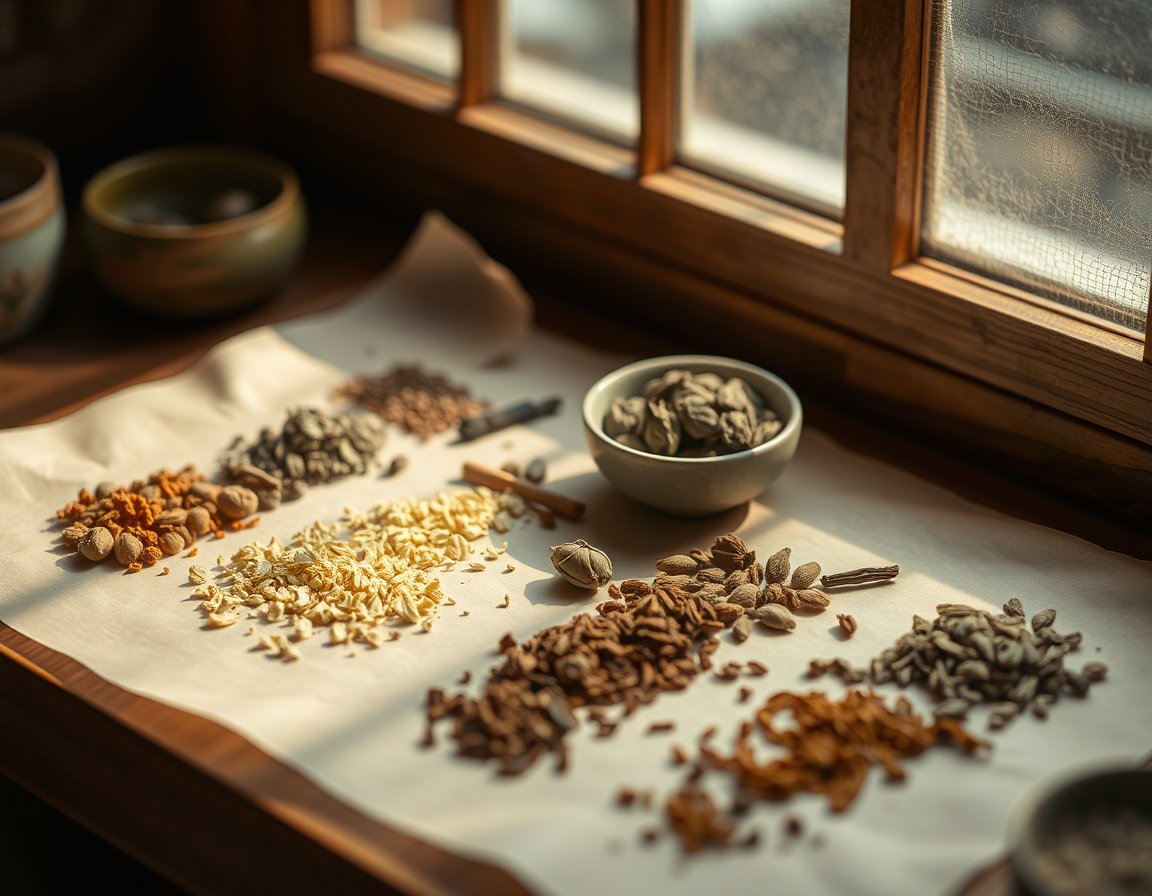
There is also human data. A double-blind, double-dummy randomized controlled trial published in 『Clinical Gastroenterology and Hepatology』 in 2019 divided 291 functional constipation patients into three groups—Mazirenwan, senna, and placebo—and administered treatment for 8 weeks, followed by an additional 8 weeks of follow-up. At the 8-week mark, the complete response rates were 68% for Mazirenwan, 57.7% for senna, and 33.0% for placebo. The difference from placebo was significant, but the difference from senna was not significant (p=0.14). At the 16-week mark, the rates were 47.4%, 20.6%, and 17.5% respectively. The authors' conclusion is cautious: Mazirenwan was well-tolerated and increased bowel movement frequency, but it is difficult to consider it superior to senna, and it can be considered an alternative option.
The Place of Seboksan
Seboksan (洗腹散) is a Korean Medicine prescription formulated directly by jaimdang Korean Medicine Clinic. It combines Daewhang (大黃), which influences intestinal movement; Mangcho (芒硝), which draws in water; Doin (桃仁) and Chajeonjapi (車前子皮), which aid lubrication; Gyeji (桂枝), which promotes circulation; and Gamcho (甘草), which soothes tension, all according to the Gunsinjasa (君臣佐使) principle.
There is a point to clarify. The Daewhang (大黃) included here is an anthraquinone-based ingredient, similar to senna. The explanation "it's Korean herbal medicine, so there's no stimulation" is not valid. However, it differs from self-medicating and increasing laxative dosage in that it does not rely on just one type of stimulation, and it first distinguishes through consultation whether the patient's condition is more aligned with Dry Heat or Qi Deficiency.
Preparation takes place at the off-site herbal dispensary in Paju, Gyeonggi Province. Standardized herbal ingredients are quantified for their marker compounds using HPLC, undergo self-inspection for heavy metals and residual pesticides, and are then decocted using a standardized process with controlled temperature, time, and pressure. Each batch undergoes quality inspection, and lot numbers are affixed to the pouches. The process is detailed in the article [Off-site Herbal Dispensary and Herbal Medicine Quality](/en/journal/wonoe-tangjeon-quality).
The decision on whether and for how long to take it is made after consultation and review by a Korean Medicine doctor. If you are already using laxatives, you must inform us of the type and dosage. The procedure is outlined in the [Non-face-to-face Korean Herbal Medicine Prescription Guide](/en/journal/bidaemyeon-hanyak-guide).

Four Things to Prepare Before Consultation
- Count the duration and frequency — how many times a week, for how many months. 6 months and 3 months are the baselines.
- Record stool form — check if it's Bristol Stool Form Scale 1-2. Two weeks should give a clear picture.
- List current laxatives — including ingredient name, dosage, and duration. Whether the dosage has increased since starting is important.
- Check for warning signs — if there is bloody stool, anemia, weight loss, new-onset constipation, or a family history of colorectal cancer, secondary constipation must be differentiated first.
References
- Shin JE et al., 「만성 기능성 변비의 진단과 치료 임상 진료지침 개정안 2015」(Revised Clinical Practice Guidelines for the Diagnosis and Treatment of Chronic Functional Constipation 2015), 『대한내과학회지』(The Korean Journal of Internal Medicine) 91(2):114-130, 2016
- Shin JE, 「로마 기준 IV 이해하기: 기능성 변비와 항문직장 질환」(Understanding Rome IV: Functional Constipation and Anorectal Disorders), 『대한내과학회지』(The Korean Journal of Internal Medicine) 92(4):372-381, 2017
- Medicines and Healthcare products Regulatory Agency, Stimulant laxatives available over the counter: new measures to support safe use, 『Drug Safety Update』, 2020
- Whorwell P, Lange R, Scarpignato C, Review article: do stimulant laxatives damage the gut? A critical analysis of current knowledge, 『Therapeutic Advances in Gastroenterology』, 2024
- Zhong LLD et al., Efficacy of MaZiRenWan, a Chinese Herbal Medicine, in Patients With Functional Constipation in a Randomized Controlled Trial, 『Clinical Gastroenterology and Hepatology』 17(7):1303-1310, 2019
*This article is intended to provide information on constipation and the Korean Medicine perspective, and does not guarantee the diagnosis or treatment efficacy of specific diseases. Seboksan is a Korean Medicine prescription whose use is determined through consultation and prescription by a Korean Medicine doctor, and individual responses may vary. If you experience warning symptoms such as bloody stools or weight loss, or if symptoms persist, consultation with a medical institution is necessary.*
jaimdang Korean Herbal Care
Online consultation and prescriptions tailored to your constitution.
View products