
Replacing a Meal with a Protein Shake: Traditional Food Categories and Nutrition Labels
In the sikchi (traditional Korean food-based care) literature, the explanation that food nurtures the body and the statement that a product has a high protein content are not based on the same criteria. If you intend to replace a meal with a shake, do not interpret the protein number alone as equivalent to the classical concept of ‘nurturing food’; first examine what is being added and what is being removed from the meal. This article reads the scope of traditional food classification and then checks the actual composition of products.
Contents
Does the sikchi literature explain meals by a single nutrient?
The introduction of the Korea Institute of Oriental Medicine’s translated 《Qianjin Shizhi (千金食治)》 presents grains, meats, fruits, and vegetables as having different roles. This is a text explaining multiple food categories together in traditional sikchi. It should not be read as a one-to-one correspondence with modern classifications of protein, carbohydrates, and vitamins, nor as a mixing ratio to apply to today’s products. The ‘qi’ and ‘essence’ in the literature are not units meaning grams of protein or kilocalories. Introduction to the translated Qianjin Shizhi (千金食治)
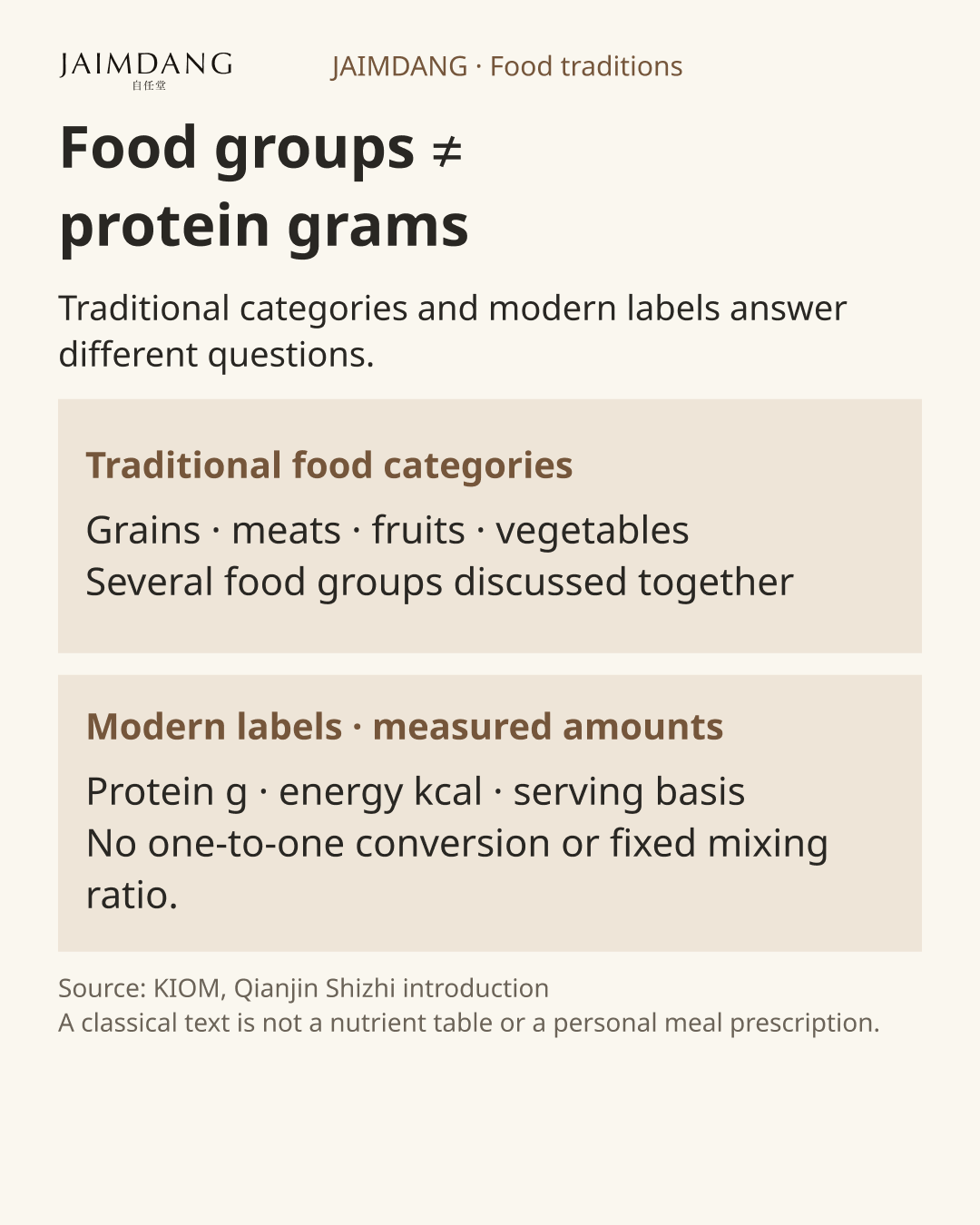
Reading this passage allows broadening the perspective to the whole meal, but it does not lead to conclusions that the classics recommended a specific powder or forbade modern nutritional supplements. The notes below asking what is replaced and what is added in the meal are editorial questions for modern application, not tables reproducing classical prescriptions.
Distinguishing sikchi food categories and today’s single serving
| Scene to Examine | Question When Reading Traditional Texts | Information to Check in Actual Products |
|---|---|---|
| Replacing breakfast with one serving | What does it mean to view multiple food categories together? | Foods removed from the original meal and the new product’s complete nutrition information |
| Adding one serving after exercise | Was the expression “nurturing” confused with the protein number? | Actual amounts of added powder, beverage, and side items |
| Recording eating experience | Was constitution determined solely by traditional descriptions? | Situations and timing of appetite, satiety, and discomfort |
This comparison is not intended to recommend skipping meals or to prescribe a specific combination for everyone. It is used as a starting point to increase materials for explaining one’s own meals. The following explanation of nutrition labels supports these questions.
How are protein supplementation and meal replacement different?
Protein supplementation is a question focusing on intake of a specific nutrient. Replacing a meal is a question about how the various foods and nutritional composition of that meal change. Even if contained in the same cup, the two purposes cannot be automatically considered the same.
Cambridge University Hospitals in the UK explains that protein powders may be a convenient way to increase intake but do not provide the benefits of other foods’ dietary fiber, vitamins, and minerals intact. This does not mean all products have the same ingredients, nor that everyone must consume a high-protein diet. Hospital nutrition guidance on protein powders
What should be read first on packaging?
Check the product’s intended use and food type, ingredients and allergy information, nutrition facts, and preparation method. Do not judge that all necessary nutrients for an individual are met just by the advertising phrase “meal replacement.” Product classification and labeling methods may differ by country, so do not apply foreign product classifications directly to products sold in Korea.
Also verify whether the numbers refer to the powder alone or to the values when mixed with a specific amount of milk. When mixed with water versus milk or soy milk, the added ingredients differ. Also distinguish whether fruits or nuts shown in product photos are actually included in the packaging.
Why can the same protein number represent different servings?
If a hypothetical powder product states 20g of protein per serving, and the beverage actually used contains 6g of protein, the total is 26g. However, if the 20g on the package already refers to the finished product mixed with that beverage, do not add 6g again. This number is an example for label interpretation and not an individual’s meal target.
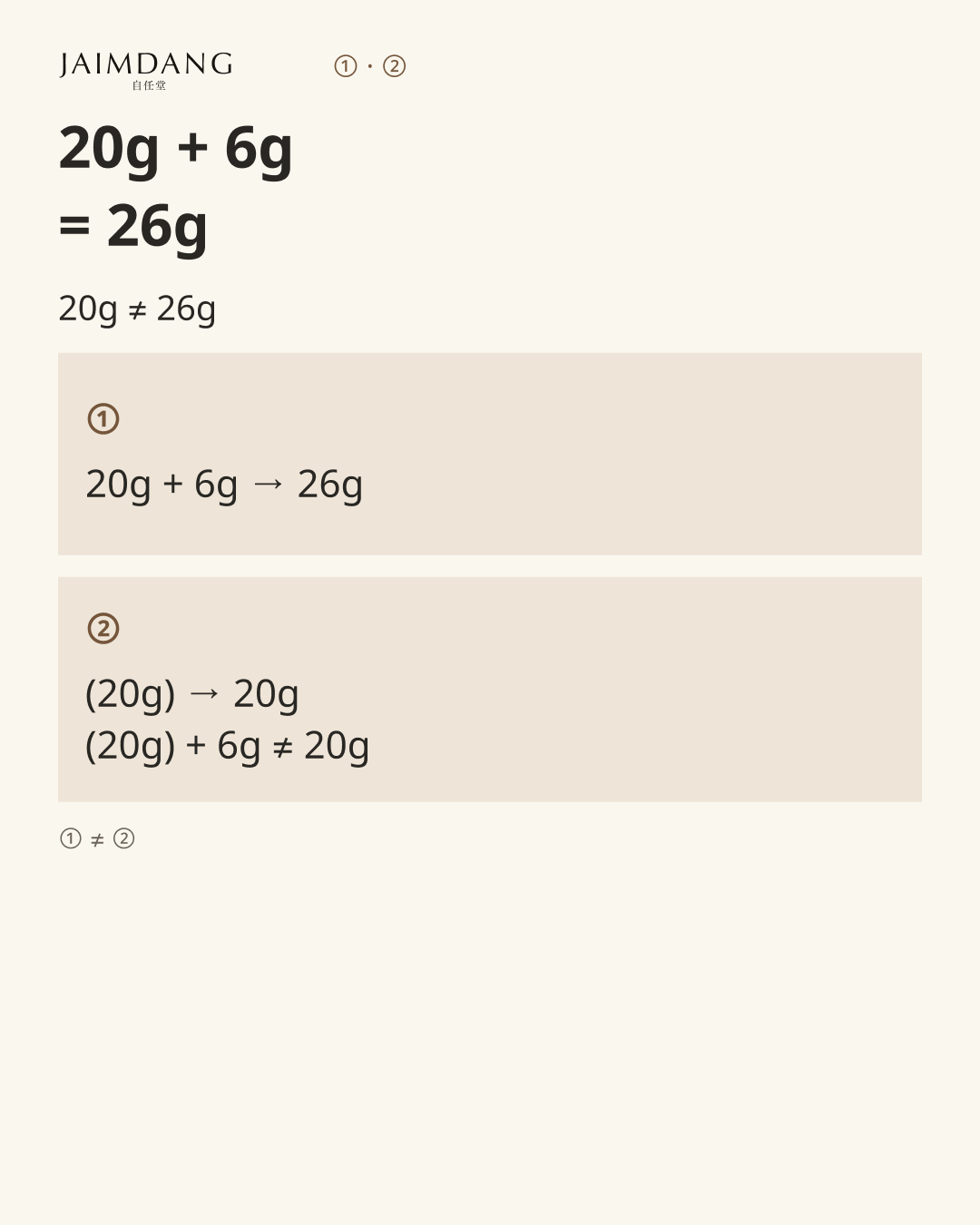
Even if protein values are the same, total calories, fat, carbohydrates, dietary fiber, and ingredients may differ. Do not judge meals as the same after matching only one item. If accurate labels are unavailable, do not fill blanks with similar product values from the internet; leave them as unknown.
Record whether you are replacing or adding to today’s meal
| Situation | What to Check | Example Record |
|---|---|---|
| Drank instead of breakfast | What was omitted from the original meal? | Ingredients of original menu and new single serving |
| Added after exercise | Was the meal otherwise eaten as usual? | Distinguish as additional intake |
| Mixed with milk | Is the value based on finished product or powder alone? | Powder amount, type and amount of beverage |
| Ate with other foods | How was the actual combination made? | Record bread, fruit, nuts separately |
This is a comparison note created by the editorial department. It is not guidance that skipping meals is more efficient nor a table verifying weight loss effects of specific products. Korean medicine consultations can also explain appetite and digestion experiences, but constitution or prescriptions are not determined solely by experiences that shakes suited well.
What steps help organize labels and meal records?
Keep both the front of the current package and its nutrition panel. Similar names do not make different flavors or sizes the same label. Record the amount of powder and the type and amount of added beverage separately, noting the preparation conditions behind the label figures. Exclude pictured ingredients you did not use.
Place the planned meal beside what you actually consumed. Distinguish replacing a meal from adding a drink afterward, and note leftovers. Leave discrepancies as questions instead of estimating missing values. These notes help explain the product and meal at a consultation; they are not a score for nutritional status or constitutional type, and do not by themselves justify changing prescriptions or dietary instructions.
Frequently Asked Questions
Can I get protein without buying protein supplements?
CUH guidance also explains that protein can be obtained from food. First examine foods already available and preparation conditions. Ingredient substitutions such as legumes and tofu are separately discussed in Plant Protein Comparison.
Does increasing mixing ingredients make it a balanced meal?
Having many ingredients is different from having the necessary composition. Judgment should be based on the actual product and the whole meal. The combinations in Breakfast Composition are reference examples and not standards requiring everyone to eat the same menu.
What if meal amounts keep decreasing and eating becomes difficult?
Do not try to solve this alone by adding multiple shakes; explain your current meals and discomforts to medical staff or nutrition experts. If you have received guidelines regarding protein or fluids due to illness, check whether you are following them. Do not change prescribed nutritional supplements’ usage based on general product advertisements.
Product and prescription information is a separate guide. The calculation example does not recommend those products as meal replacements.
jaimdang Korean Herbal Care
Online consultation and prescriptions tailored to your constitution.
View products