
They say five grains are good, but are brown bread and mixed grain products all whole grains?
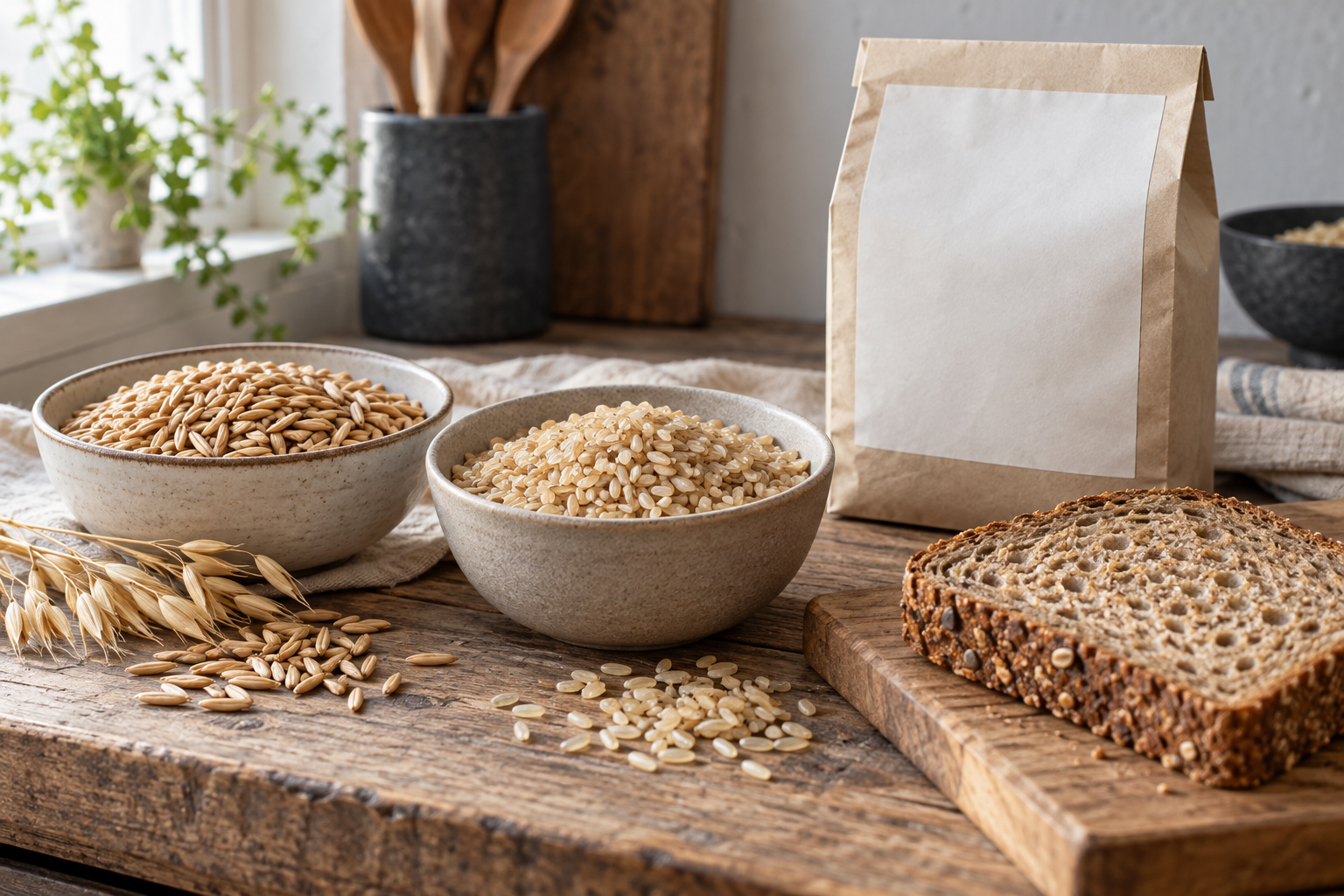
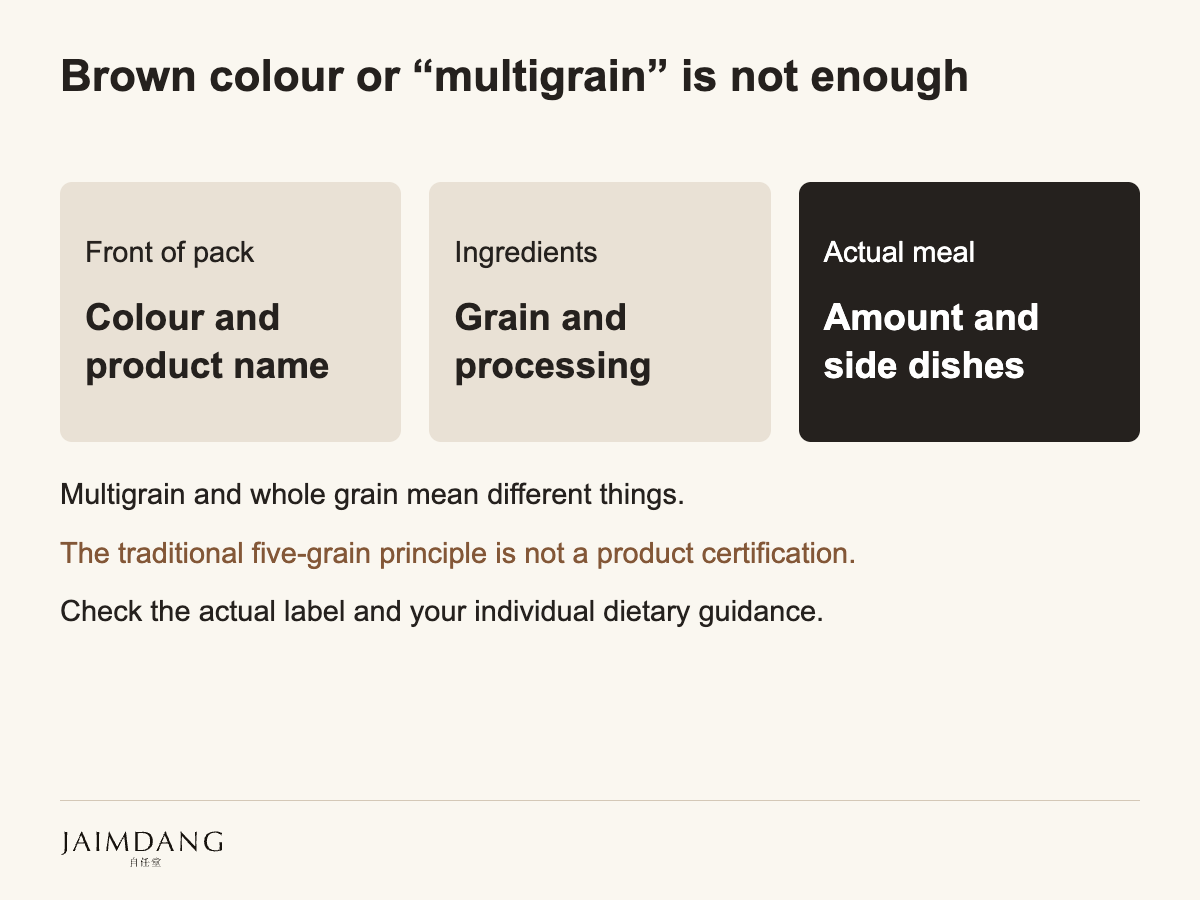
Not all brown bread or products containing various grains are whole grains. Check the ingredient list to see which grains and in what form are used, and consider the actual amount you will eat along with the accompanying foods. The classical Korean medicine concept of ogok wiyang (grains as nourishment) views grains as the foundation of diet, but it is not an expression certifying whole grain content in today’s packaged foods. Distinguishing the questions answered by traditional dietary self-care and product labeling clarifies your choices.
Contents
What is the difference between the traditional five grains and whole grains?
『Huangdi Neijing Suwen』 Zangqi Fashi Lun divides the roles of grains, fruits, meats, and vegetables to explain dietary composition. It is important not to reduce this to simply eating only grains or increasing foods of a certain color. If you refer to the expression ogok wiyang (grains as nourishment) in today’s meals, it can be used as a question to consider how to compose meals with other foods before deciding to eliminate staple foods altogether.
However, the classical classification of the five grains and the modern definition of whole grains are not the same system. Health Canada describes whole grains as foods containing all parts of the grain. Meanwhile, the term japgok (mixed grains) evokes various types of grains but does not automatically indicate how refined those grains are. Simply seeing many grain names on one package does not mean you have confirmed the processing state.
The traditional descriptions of food properties, flavors and organ systems in classical literature are not directly convertible to modern nutritional values one-to-one. While you can record the experience of feeling comfortable after eating brown bread, the color alone is not evidence that a specific organ system in traditional medicine was nourished or that body fat was reduced. If you start with the term five grains as a starting point, you must proceed to verify the actual ingredients.
What does the figure 100% represent?
Dietary materials from the University of Florida in the United States introduce how to check labels such as 100% whole wheat and ingredient lists when choosing bread or noodle products. What you need to confirm here is what the percentage refers to. Saying whole wheat was used is not the same as saying the entire product consists only of grains. Water, salt, oil, and other ingredients may be included, so do not estimate the overall nutritional composition based solely on the front label number.
Do not interpret this number as the proportion you should consume personally. Just because the package says 100% does not mean you should fill an entire meal with that product. The composition with side dishes, protein foods, and vegetables is considered separately. Choosing whole grain foods and determining your own meal portions are related but not the same decision.
Terminology and labeling systems vary by country. Health Canada distinguishes between whole wheat and whole grain in its explanations. This explanation is not transferred as the legal definition for all 'whole wheat' products sold in Korea. For imported products, it is more accurate to check both the original labeling and the domestic labeling, and if the explanation is insufficient, to inquire with the manufacturer about the ingredients and processing forms. Contents that cannot be confirmed are not filled with estimated numbers.
How should the front and back of the product be compared?
| Prominent Labeling | Difficulties in Understanding from This Alone | Information to Check Together |
|---|---|---|
| Brown bread | Cause of the color and processing state of the grain | Actual ingredients |
| Multiple grains/mixed grains | Whether each is a whole grain | Grain names and processing forms |
| Use of whole grains | Amount used and other ingredients | Whether content labeling exists and the full list of ingredients |
| Dietary fiber emphasis | Composition of the entire meal and other components | Nutrition facts for the same reference amount |
Health Canada also advises not to judge whole grains by color alone but to read the ingredients. The questions in the table are not results judging the quality of specific products. Even within the same brand, ingredients may differ by product type, so check the packaging of the actual product to be purchased. Do not use ingredient information from advertising photos or outdated sales pages as confirmed information for the current product.
Dietary fiber values should also be read according to the reference amount. One product may list per 100g, another per piece. Ignoring this difference can make a larger number appear to be a better choice. The calculation method is separately organized in Nutrition Labeling and Actual Amount Consumed. The focus of this article is not calorie calculation but distinguishing types of grains and labeling.
What is the procedure for choosing staple foods from the perspective of traditional dietary self-care?
First, determine the meal setting you want to change. Distinguish first whether it is breakfast bread, lunch rice, or snack cookies. Choosing a grain-containing snack does not mean it serves the same role as a meal like rice or bread. Confirm that the purpose of changing staple food selection matches the actual eating situation.
Second, look side by side at the ingredients of the current product and candidate products. If taking photos, ensure the product name and reference amount are visible together. Do not guess difficult words but list them for confirmation. The key at this stage is to separately check the grain images on the front of the package and the actual ingredients.
Third, plan the rest of the same meal. Ogok wiyang (grains as nourishment) can be utilized from the perspective of traditional dietary care by considering multiple elements together rather than understanding it solely as the excellence of grains. If you changed the bread, check whether the accompanying foods were omitted; if you changed the rice, check the side dishes and the overall quantity. This is a comparative method devised by the editorial team inspired by traditional concepts, and it does not mean that the classics determined modern plate proportions.
Fourth, record easy-to-eat cooking methods and actual reactions. It is not necessary to eat a large amount of unfamiliar foods at once. Note whether it is difficult to chew, whether the cooking time fits your lifestyle, and whether there was any discomfort after eating. Do not immediately conclude that a grain does not suit your constitution just because you experience gas. Repeated discomfort should be examined together with various conditions such as quantity, cooking method, and accompanying foods.
Fifth, check whether you can continue to choose it. Not only price but also availability, storage, and how you share it with your family are important. You do not have to choose the most expensive product seen in the store. Unit price comparison for grocery shopping is a separate tool for viewing costs. Even if the nutrition label is correct, if it is realistically difficult to use, you can consider other options.
FAQ: Frequently Asked Questions
If I choose whole grains, do I not need to consider the quantity?
Both the type of food and the actual amount eaten are considered. The term whole grains does not mean you can eat unlimited amounts or that weight loss is guaranteed. It becomes clearer whether you have added healthy-looking ingredients to your usual meals or replaced your staple food.
Should I continue eating even if digestion is uncomfortable because it is good for my body?
Enduring discomfort is not evaluated as practicing traditional dietary self-care. Record symptoms, cooking methods, and amounts eaten, and if discomfort repeats or worsens, check your personal condition. If you have been advised to avoid certain grains due to allergies or celiac disease, that guidance takes precedence over general whole grain recommendations.
Do five-grain products or Korean herbal medicine replace meal composition?
You cannot judge the balance of a meal by the product name. The purposes of foods and medicines are different. Jaimdang product information is a route to check product information and is not evidence of whole grain effects. Based on records explaining your meals and digestive status, distinguish and verify the necessary information.
Original reference text
- 『Huangdi Neijing Suwen Buzhu Shiwen』 Zangqi Fashi Lun: Traditional dietary care classification of five grains, five fruits, five livestock foods, and five vegetables. Does not imply modern whole grain labeling standards or weight reduction effects. Verified on 2026-10-21.
- Health Canada, Eat whole grain foods: Guidance distinguishing color, ingredients, and grain product labeling. Canadian terminology is not generalized to foreign regulations. Verified on 2026-10-21.
- University of Florida IFAS, Shopping for Health: Whole Grains: Example of checking ingredients in whole grain products. Ingredient lists from specific brands are not reproduced in this article. Verified on 2026-10-21.
jaimdang Korean Herbal Care
Online consultation and prescriptions tailored to your constitution.
View products