
How to Prepare Regular Meals When Meal Times Change Due to Shift Work?
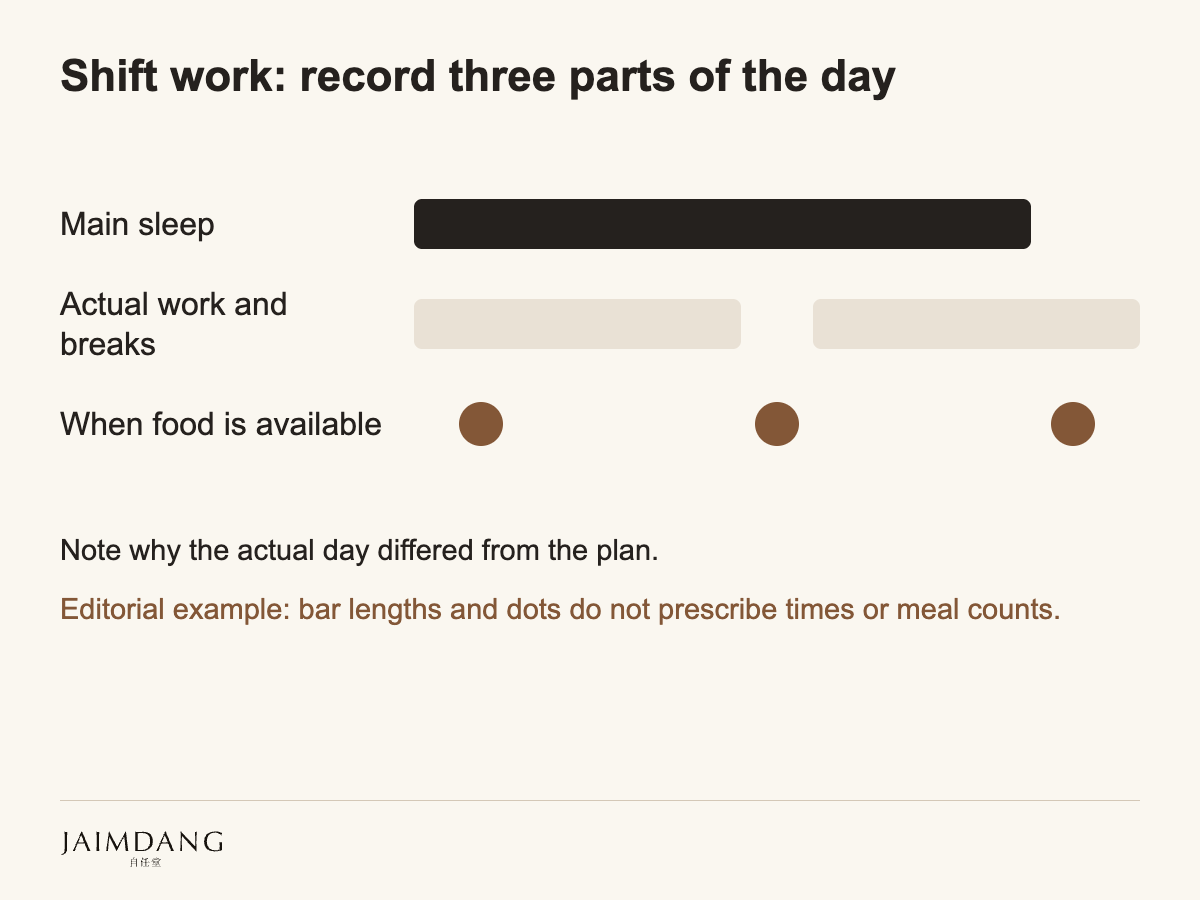
Regular meals during shift work do not start by forcibly keeping the same time every day. Place the main sleep and commuting times, actual rest periods, and times when food is available on one chart to secure opportunities to eat. The concept of gigeoyusang (regularity in daily living) in Korean medicine health cultivation refers to maintaining regularity in daily life. Rather than imposing the daytime worker’s schedule on night shift workers, it is used to find conditions that can be prepared within changing schedules.
Contents
What are gigeoyusang (regularity in daily living) and meal planning for shift work?
The health-cultivation chapter of 『Beiji Qianjin Yaofang』 cites the tradition of 『Huangdi Neijing』 to describe a lifestyle with regular moderation in food and daily activities, avoiding excessive fatigue. Here, daily living includes the daily routine of waking and resting. This classical health cultivation view is not a clinical study testing today’s shift work schedules, nor can it be used as evidence that eating at specific times extends lifespan or reduces weight.
The editorial team’s suggestion for applying this perspective today is to record sleep, rest, and post-meal discomfort together without judging success based solely on meals. Even meals during the same night differ depending on whether they were eaten during a break at work or after returning home having missed daytime meals. The first question is how eating opportunities were arranged, rather than whether appetite was suppressed.
Also, working conditions cannot all be changed by individual will. If break times are irregular or there is no refrigerator, simply advising to prepare a lunchbox does not solve the problem. Actual choice conditions such as restaurant operating hours, safe storage places, and whether breaks can be taken in shifts must be checked. Night work itself is not evaluated as a faulty lifestyle, nor are difficulties caused by work attributed to the individual.
How should the 24-hour and nighttime figures be interpreted?
The US NIOSH night shift nurse training materials suggest maintaining meal rhythms as close as possible to day and night and dividing meals over 24 hours. They also advise reducing or avoiding intake between midnight and 6 a.m., but this should not be translated into a mandatory fasting rule for all shift workers. The target population of the material and individual diseases, medications, and work conditions must be considered together.
In this article, 24 hours is an observation unit to avoid cutting records at midnight. For those whose shifts continue before and after midnight, viewing meals on two separate dates may cause omissions or duplications. Recording meals and snacks from waking from main sleep until the next main sleep makes it easier to see the flow across shifts. This is not a method of prescribing a fixed number of meals or nutritional amounts for individuals.
If you are using medications that carry a risk of hypoglycemia or are undergoing treatment that requires regular meals, check your own guidelines before applying an internet timetable. Do not postpone necessary meals or skip medications to align with nighttime fasting. Arbitrarily set fasting times should not take precedence over safety during work or existing treatment plans.
What conditions should be compared by work type?
| Work Situation | Conditions to Record First | Options to Prepare |
|---|---|---|
| Continuous night shifts | Main sleep and breaks during work | Distinguish meals before work and foods available during breaks |
| Transition from day shift to night shift | Actual wake-up and sleep times on transition day | Check overlapping or missed meals in usual schedule |
| Frequent delay of breaks | Difference between scheduled and actual breaks | Confirm substitute breaks and food storage conditions at workplace |
| Planning to sleep soon after leaving work | Hunger upon returning home and post-meal discomfort | Adjust meals before sleep without simply increasing or skipping them |
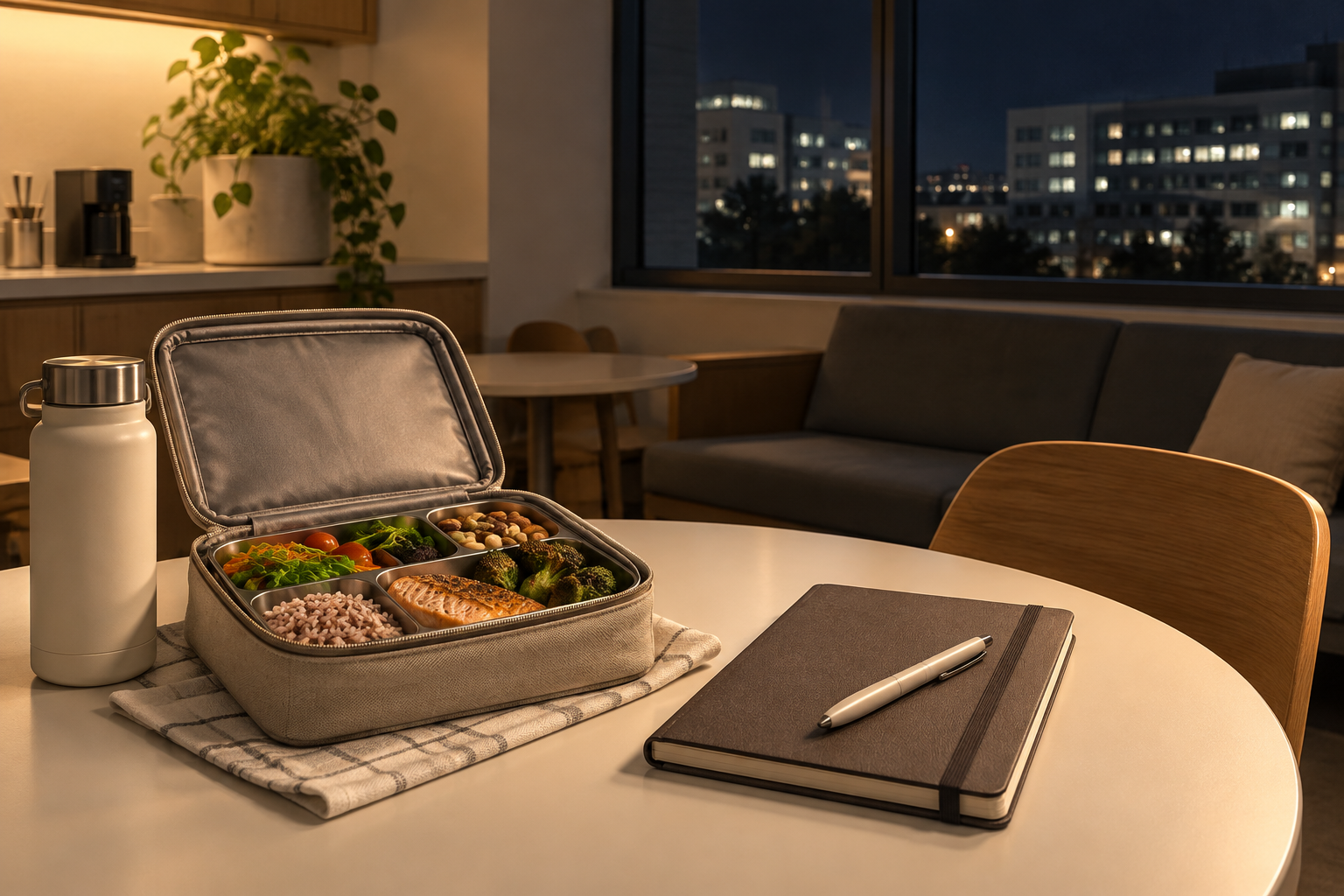
The above table is an example of schedule organization by the editorial team. The same menu or portion is not assigned to people eating at night. NIOSH also addresses the quality of food during work and the environment for comfortable eating with colleagues. What foods are possible depends on allergies, storage availability, and workplace rules. Avoid choosing to eat food left at room temperature for a long time just to keep meal times.
Records should include not only whether the schedule was kept but also reasons for changes. Instead of just writing “ate a snack at dawn,” add context such as “could not eat prepared meal due to delayed break.” This allows adjusting breaks and storage conditions before banning snacks next time. Specific food composition can be further reviewed in Meal Check.
What is the procedure for applying this to the next work schedule?
First, mark the main sleep times on the work schedule. Check if reducing sleep to prepare meals is repeated. To interpret gigeoyusang (regularity in daily living) in your own schedule, it is necessary to give rest time the same attention as meals. Distinguishing expected sleep from actual sleep makes it easier to explain where plans broke down.
Second, find the actual times when food can be eaten. Even if breaks are listed on the schedule, available time may differ due to commuting or work handovers. If meals need to be purchased, check whether the location operates at night. Do not base your plan on cafeterias or refrigerators that you cannot actually use.
Third, distinguish the roles of meals and snacks when preparing them. If the prepared snacks repeatedly replace an entire meal, record that fact. Conversely, if there are sufficient meal opportunities but food is automatically taken whenever feeling tired, observe the eating location and the feelings at that time. It is not necessary to perfectly distinguish hunger from habit in order to record this.
Fourth, after finishing work, briefly add notes on post-meal bloating, heartburn, changes in bowel movements, and sleep. Although such lifestyle connections can be explained in Korean medicine consultations, a few lines of records do not confirm issues with spleen-stomach functions in traditional Korean medicine or constitution. Do not attribute symptoms to a specific work shift or a single food item; use the records to check for recurring conditions.
Fifth, do not simply copy the previous schedule on transition days. Review the start time of the next shift and sleep opportunities, then adjust preparations accordingly. Menus that worked well may need to be changed if rest or storage conditions differ. Do not mark plan modifications as failures; leave them as responses to changed environments.
FAQ: Frequently Asked Questions
Should I avoid eating even if hungry during night shifts?
This article does not recommend forced fasting. Actual hunger, daytime meal opportunities, illnesses, and medication guidelines should all be checked together. Do not endure unusual symptoms such as dizziness or cold sweats to fit the schedule. Ensure safety and follow existing emergency response guidelines or medical assistance.
Should I always revert to a daytime schedule on days off?
It is not possible to set this uniformly without knowing individual shift cycles and sleep conditions. This article is a meal preparation tool, not a sleep transition treatment guideline. If sleep problems persist or drowsiness during work or driving is severe, do not try to solve it by only adjusting meal plans.
Can I change the timing of herbal medicine intake myself according to the work schedule?
Meal records and medication instructions are separate. Even after checking product information, there is no basis for arbitrarily changing dosage or frequency. Show the actual work, sleep, and meal schedules to the prescribing medical staff and confirm whether adjustments are appropriate. Common concerns about late-night snacks can be referenced separately from nighttime eating patterns.
Original Reference Text
- 『Beiji Qianjin Yaofang』 Volume 27 health-cultivation chapter original text: Traditional health cultivation perspective addressing food, rest, and overwork together. Not clinical evidence for shift work effects. Verified 2026-10-21.
- NIOSH, Diet Suggestions for Night-Shift Nurses: Dietary guidance for nurses working night shifts. Verified 2026-10-21.
- NIOSH, Fatigue and Work: Work conditions and fatigue, environment to be addressed jointly by employers and workers. Verified 2026-10-21.
jaimdang Korean Herbal Care
Online consultation and prescriptions tailored to your constitution.
View products