
When Should Pre-Made Diet Meals Be Refrigerated and How Should They Be Reheated?
The priority with pre-made meals is not how many servings were prepared at once, but whether they can be safely cooled, stored, and consumed. Do not leave cooked food at room temperature for long periods; instead, decide the eating dates, portion the food accordingly, and plan refrigeration or freezing. Preparing a weekly menu does not mean all food can be refrigerated for a whole week. Meal preparation is a way to create options for busy days and does not guarantee weight loss by itself.
What Does Meal Preparation in Advance Mean?
In this article, preparing meals in advance includes everything from purchasing ingredients to dividing cooked meals into containers. Unwashed vegetables, raw meat, and cooked side dishes are not subject to the same storage standards. Here, the focus is on storing sufficiently cooked leftover food at home. Separate guidelines are needed for infant food, therapeutic diets, and special storage conditions for specific products.
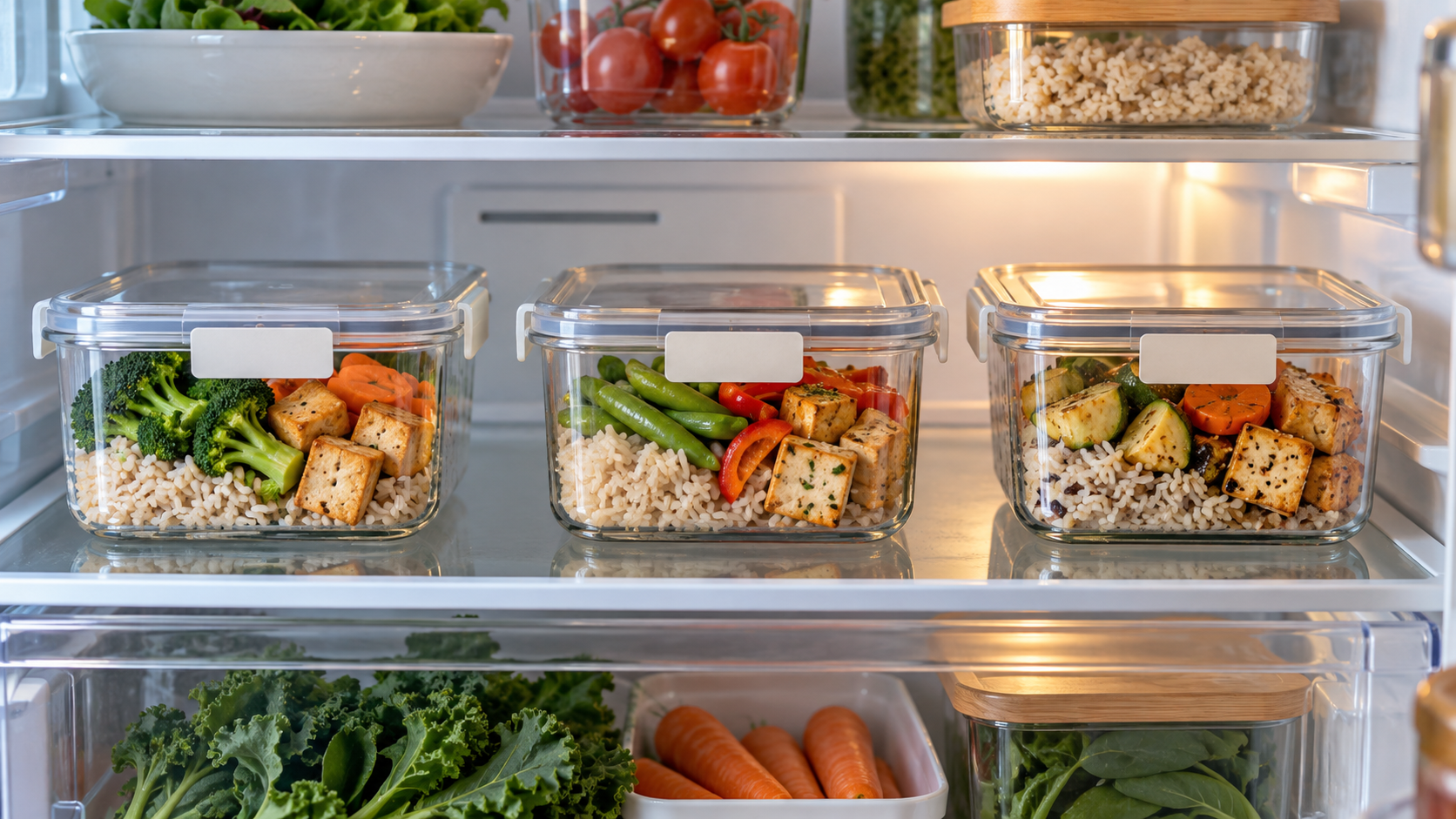
The amount to prepare is determined by your actual schedule. Consider whether the food is for Monday dinner and Tuesday lunch, or if eating will be delayed due to dining out. Simply remembering that food is in the refrigerator can cause you to forget when it was made. Label containers with the food name and cooking date so you know which to check first. This date label is not a certificate guaranteeing safe handling. If the refrigerator is shared, note the container owner and eating plan separately, and do not change the original cooking date if the food is transferred to another container.
How Should Storage Periods and Temperature Values Be Interpreted?
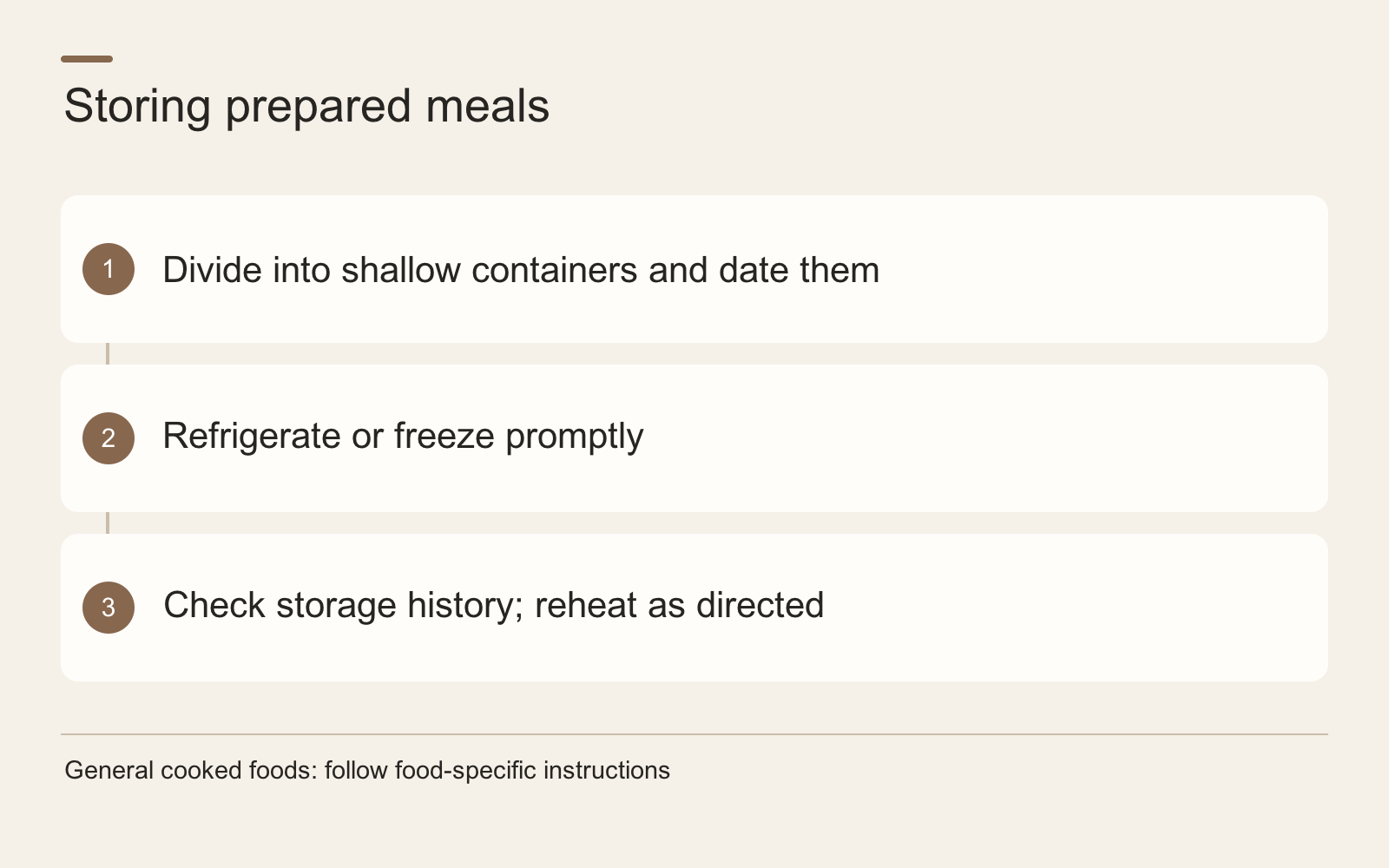
The U.S. USDA FSIS advises refrigerating cooked leftovers within 2 hours after cooking or after hot holding ends. In hot environments where ambient temperature exceeds about 32°C, a 1-hour guideline applies. This does not mean intentionally leaving food at room temperature until that time. Large quantities should be divided into shallow containers to cool quickly and then refrigerated. Leaving a large pot at room temperature overnight does not comply with this principle.
The FDA’s home storage guidance recommends refrigerator temperatures at or below 4°C and freezer temperatures at -18°C. Rather than relying solely on the refrigerator’s setting numbers, verify the internal temperature with a thermometer. The USDA’s general refrigerated storage period for leftovers is 3 to 4 days. If you plan to eat later than this, decide in advance whether to freeze appropriately or reduce the cooking quantity. Follow stricter guidelines if they exist for specific foods or products.
For reheating leftovers, the USDA standard is to confirm with a food thermometer that the center reaches about 74°C. Do not assume all parts have reached the same temperature just because steam is visible on the surface. This temperature is a reheating standard for leftovers and does not mean changing the initial cooking temperatures for different types of raw meat to the same number. When using a microwave, also check the product and device instructions and container suitability.
What Are the Differences Between Refrigeration, Freezing, and Storage During Transport?
| Planned Situation | What to Decide First | Judgments to Avoid |
|---|---|---|
| Cooked meals to be eaten soon | Refrigerator temperature and cooking date | Assuming refrigeration means indefinite safety |
| Food with delayed eating date | Decide whether to portion and freeze | Assuming freezing makes food safe after prolonged room-temperature storage |
| Meals to bring to work | Maintaining refrigeration during transport and storage after arrival | Excluding commute time from storage records |
| Food in large containers | Methods to divide for quick cooling | Assuming the inside is as cold as the outside of a large container |
This table is an editorial example summarizing questions readers should prepare. Do not judge safety based solely on container color or size. If your workplace lacks a refrigerator, simply refrigerating at home does not guarantee safety until lunchtime. First confirm whether you can provide cooling means and storage location, then choose a meal preparation method that fits those conditions.
What Procedures Should Be Followed From Cooking to Eating?
First, decide the eating dates and storage locations. Consider the FDA’s advice that overfilling the refrigerator can hinder cold air circulation. Check existing food before shopping, and avoid making excessive amounts due to pressure to consume everything even if plans change. The composition of rice, protein foods, and vegetables can be reviewed together with One Meal Check.
Second, divide cooked food according to storage standards and label the dates. An example label might be “Cooked Monday evening, for Tuesday lunch.” The portioned amount is not a personal nutrition prescription or mandatory quantity. If eating with others, include plans to separate foods to avoid mixing due to allergies or dietary restrictions.
Third, check storage history when eating. If you cannot confirm when it was made or if temperature control was interrupted during storage, do not conclude safety based only on smell. The FDA explains that food causing food poisoning may not appear, smell, or taste abnormal. Do not judge safety by tasting a bite.
Fourth, leave notes to reflect in the next preparation. Specify whether uneaten food was due to schedule changes, excessive quantity, or insufficient storage space. This clarifies conditions to change next time rather than simply judging “preparation failure.” Good meal planning does not require cooking every meal yourself. Start with manageable amounts and methods.
FAQ: Frequently Asked Questions
Can I refrigerate all food if I prepare a week’s worth?
The planned period of one week and the refrigerated storage period for food differ. Divide eating dates and check the general leftover food guideline of 3 to 4 days and food-specific instructions. Plan in advance which parts to freeze safely after portioning. Do not assume freezing food past the date or after improper storage restores it to its original state.
Can I mix frozen vegetables and convenience foods when preparing?
It is possible but you must follow the cooking and storage instructions on the packaging. Not all frozen products are ready to eat after thawing. Selecting ingredients to reduce preparation time is different from omitting cooking instructions. When changing products, verify whether existing methods still apply.
Should herbal medicine intake follow these storage standards?
No. This article provides general food storage guidance. Follow the storage and intake instructions provided with prescriptions or herbal medicines. Do not change dosage or timing just because you prepared meals. Jaimdang product information is a source for related information, not evidence proving food storage safety.
Reference Sources
- USDA FSIS, Leftovers and Food Safety: Rapid refrigeration of leftovers, general refrigerated storage periods, and reheating temperatures. Checked 2026-10-19.
- FDA, Are You Storing Food Safely?: Home refrigeration and freezing temperatures, guidance that safety cannot be judged by smell alone. Checked 2026-10-19.
jaimdang Korean Herbal Care
Online consultation and prescriptions tailored to your constitution.
View products