
Indoor Walking on Rainy Days: Choosing a Safe Place to Start
If you need to change your walking plan due to rain or unfavorable outdoor conditions, first check the available indoor locations and safe routes. Not all indoor spaces are suitable for walking, and you do not have to match the time and pace you usually walk outdoors exactly. Decide on activities that fit today’s possible environment and record what you actually do. The purpose of this article is to prepare alternatives you can continue with, rather than suddenly increasing intensity to compensate for missed exercise.
Contents
What Are Indoor Walking Alternatives?
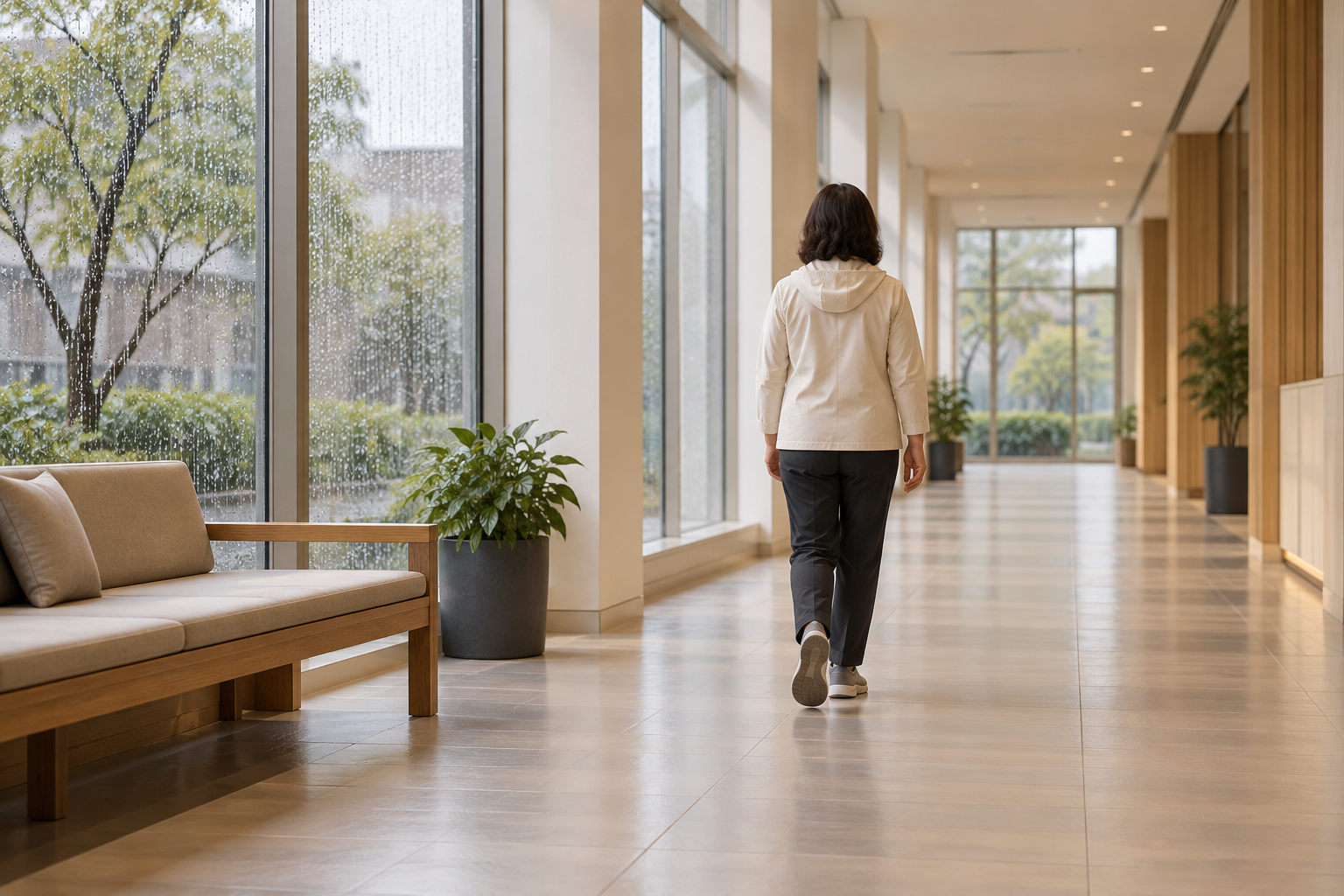
Indoor walking refers to walking activities within available spaces at home or indoor facilities. Rather than whether exercise equipment is present, first consider whether you can move safely, whether use is permitted, and whether there are places to rest. Shopping malls, local sports facilities, and permitted routes inside buildings can be candidates, but not all facilities allow exercise use.
The CDC introduces advantages of indoor walking such as flat and wide routes in malls, lighting, protection from weather, and availability of restrooms and resting spots. This does not guarantee the safety of specific stores or local facilities. Before actual use, check current operating hours, construction zones, access methods, and facility rules. Being allowed to enter and being allowed to walk at your desired pace are different.
Available movement space at home varies by person. Continuously turning in a narrow space increases direction changes and may overlap with family members or pets moving around. Do not assume the spacious room shown in online videos is the same as your space. Listing location constraints is not an evaluation of lacking exercise willpower but a confirmation for realistic planning.
How Should Exercise Time Numbers Be Applied?
The CDC’s general adult recommendation is at least 150 minutes of moderate-intensity aerobic activity per week and muscle-strengthening activities on 2 or more days per week. This number is an overall weekly activity guideline, not a requirement to complete 150 minutes on a rainy day. Do not count all brief indoor movement time as moderate-intensity activity; distinguish actual intensity and duration.
If you are trying indoor walking for the first time today, you can start according to your condition and environment rather than completing a fixed amount. The CDC suggests starting slowly and gradually increasing the range as possible. This article does not prescribe how long you should start with or how quickly you should increase activity. If you have received guidance regarding illness or movement restrictions, plan within that scope.
Step counts or calorie numbers from devices can be recording tools but do not confirm activity effectiveness by directly comparing numbers from different devices. Movements involving frequent turns in a small space and walking along a wide route have different conditions. Do not repeat uncomfortable motions just to increase numbers; record where and what activities you performed together.
What Should Be Compared by Location?
| Location Candidate | Environmental Checks | Adjustments in Planning |
|---|---|---|
| Indoor movement space at home | Floor objects, slipperiness, movement routes | Methods that avoid sudden turns or running |
| Indoor public spaces like malls | Operating hours, crowding, facility use rules | Routes that do not disturb other users |
| Local sports facilities | Eligibility, cost, accessibility | Actual visit times and activities |
| Permitted routes inside workplace | Work safety regulations and passage | Within limits that do not block work or emergency routes |
This table is an editorial example for choosing locations and does not mean all facilities are safe or free. Even if there is no admission fee, time and cost for travel may apply. Checking nearby candidates in advance can reduce the burden of searching all information again when weather changes, but actual options vary by region.
Stairs are not automatically considered a substitute for flat walking. Stairs involve height changes, fall risks, and other users’ passage. If an activity is unfamiliar or uncomfortable, do not suddenly choose it just because it is raining. When following exercise videos, do not assume jumps or fast turns as defaults; check your space and body condition.
What Is the Procedure for Making an Alternative Plan?
First, write down the reason for changing outdoor activity. Distinguish whether it is inconvenient movement due to rain, strong winds or slippery surfaces, or concerns about outdoor air quality. Check the latest official weather and air quality information for your area. This article does not judge exercise feasibility for specific dates or regions.
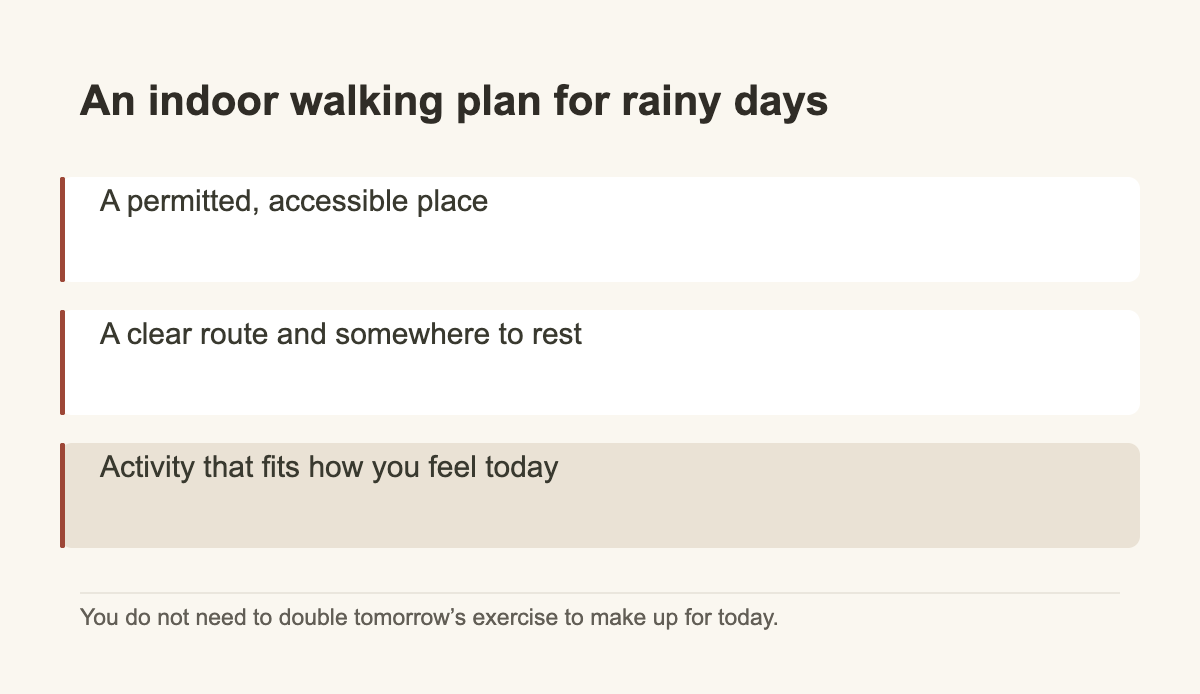
Second, check available indoor candidates. Look not only at operating hours but also whether exercise use is permitted, resting spots, and access routes. If you use a wheelchair or walking aid, confirm that entrances, movement width, slopes, and other necessary conditions are met. Do not exclude other suitable movement activities just because the name is “walking.”
Third, examine the route before starting. At home, clear objects and check for collision points during movement. In public spaces, watch for construction notices, wet floors, and crowded areas. When moving while watching a screen, do not lose awareness of surroundings, and do not prioritize filming activities or checking device numbers over safe movement.
Fourth, perform possible activities and monitor your body’s response. Avoid enduring discomfort just to meet target numbers. If emergency symptoms such as sudden chest pain or severe shortness of breath occur, stop exercising and seek emergency medical help immediately. Do not assume repeated discomfort will be resolved simply by changing location; check your condition.
Fifth, leave notes for the next rainy day. Writing down the location, actual use time, inconvenient routes, and reasons for difficult access will make future decisions easier. Instead of just checking “exercise completed,” record what was possible. If the location was unsuitable, you can find other candidates; if you rested for a day, realistically revise the next plan.
FAQ: Frequently Asked Questions
Does walking at home have the same effect as walking outside?
Do not judge effects based on location name alone. Actual intensity, time, and movement conditions differ. Indoor activities should not automatically be rated lower than outdoor activities. This article addresses alternative activity locations, and intensity verification can be considered separately from existing walking/exercise guidelines.
If I rest on a rainy day, do I have to do twice as much the next day?
You do not have to simply make up missed activity by doubling it. Plan according to your current condition and next schedule without suddenly increasing burden. Checking muscle soreness the day after exercise is a separate guide for when symptoms occur. Pain is not required to evaluate exercise as effective.
How should weight management be recorded together?
Separate the fact of indoor activity from short-term weight changes. Do not judge the success of location choice by daily weight changes alone; consider meals, sleep, and activity together. Weight maintenance record comparison and related product information are additional information sources and are not used as evidence guaranteeing weight loss effects of specific activities or products.
Primary Sources
- CDC, Take a Walk in the Mall: Characteristics of indoor walking environments. Checked on 2026-10-20.
- CDC, Overcoming Barriers to Physical Activity: Alternatives and gradual starts for constraints like weather and time. Checked on 2026-10-20.
- CDC, Adult Activity: An Overview: Weekly adult activity recommendations. Checked on 2026-10-20. Not used as individual exercise prescriptions or guarantees of weight loss effects.
jaimdang Korean Herbal Care
Online consultation and prescriptions tailored to your constitution.
View products