
How to Compare Weight and Lifestyle Records When Worried About Yo-Yo Effect
After weight loss, don’t look at weight alone; instead, compare meal, activity, and sleep records side by side for the same period. It’s important to distinguish between the fact that numbers have increased and the reasons why they have risen. You may add your own descriptions of digestion and bodily sensations from a Korean medicine perspective, but do not conclude constitution or causes based solely on records. This article provides an example of records to explain changes during the maintenance phase.
What Are Maintenance Phase Records?
Maintenance phase records are materials that document changes in lifestyle and weight trends after weight loss is complete. Instead of scoring daily numbers, note the conditions under which measurements were taken and what changed during that period. Leave days without records blank, and clearly separate any later recollections added from the original records.
The U.S. NIDDK explains that after weight loss, the body’s required calories may decrease, and continuing healthy eating and regular activity is important for weight maintenance. This general explanation does not fully account for individual causes of weight regain. Look for parts where previous habits have returned, but do not add unrecorded events as facts.
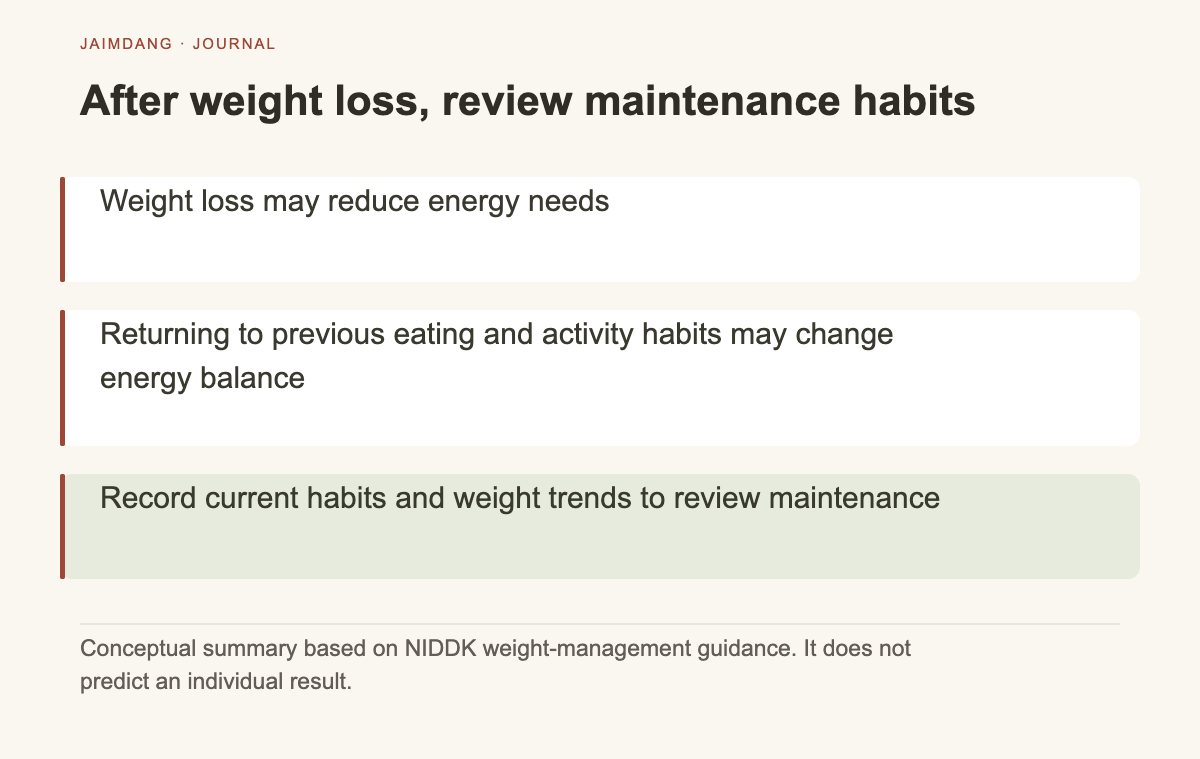
*This diagram is for understanding the maintenance phase. It does not predict individual weight changes or specific treatment outcomes.*
Over What Period Should Numbers Be Read?
A 2007 study from the U.S. National Weight Control Registry compared changes in weighing frequency with weight changes after one year. The group that reduced weighing frequency gained an average of 4.0 kg, the group that increased frequency gained 1.1 kg, and the group that maintained frequency gained 1.8 kg. These are observed group averages and do not imply causation or predict individual outcomes simply by weighing more often.
In personal records, attach the period next to numbers. Instead of saying “it increased since last time,” note the comparison date and measurement conditions, and check for missing records in the same period. Do not directly compare a one-year average from research with changes over a few days, nor transfer others’ results as your own goals. If the recording method changes, indicate this before making comparisons.
How to Compare Weight Records and Lifestyle Records?
| Record Item | What to Check | What Not to Conclude |
|---|---|---|
| Weight | Measurement date and conditions, missing days | Determining cause of weight regain from a single value |
| Meals | Meal times and actual food consumed | Filling in unknown amounts with exact numbers |
| Activity | Changes in usual schedule and movements | Interpreting one activity as the sole cause of results |
| Sleep & Digestion | Time of falling asleep, post-meal sensations recorded in own words | Diagnosing constitution or disease based on sensations alone |
The Korean medicine perspective is one context for reading records. The Korean Society of Obesity Medicine addresses traditional pathological explanations of obesity involving the spleen and stomach’s transport and transformation functions, qi deficiency, and dampness-phlegm. This is a Korean medicine explanatory framework and does not correspond to modern calorie calculations. Separating direct observations like “post-meal bloating” from interpretations such as “due to dampness-phlegm” helps avoid mixing different explanations and making premature conclusions.
How to Set Procedures for Reviewing Records?
- Place records side by side for comparison. Align weight values and lifestyle notes by the same period. Do not fill in missing data by guessing from one side.
- Mark changed conditions. Note verifiable changes such as schedule, meal times, and activities. If you only remember that something was different, do not invent specific quantities.
- Separate observation from interpretation. For example, “worked late and ate dinner late” is an observation; “weight increased because of that” is an interpretation. Leave unconfirmed explanations as questions.
- Decide on items for the next record. For items with many blanks, adjust the timing or reduce the range of recording. Consider whether the method is sustainable, and if you find yourself fixated on weight numbers, reconsider the recording approach.
For a broader explanation of meals and activities during maintenance, see Lifestyle Habits After Weight Loss Maintenance. Even when reading information about Gongbihwan products, do not change dosage or judge medication effects based solely on these records.
Frequently Asked Questions (FAQ)
Is it meaningful only if I weigh myself daily?
The study reported a correlation between changes in weighing frequency and weight change. It does not prescribe the same frequency for everyone. Leaving your recording conditions and missing periods together is the starting point for comparison.
Can Korean medicine constitution be identified if digestion is slow?
You cannot determine constitution from that sensation alone. Recording when and after which meal you felt it is separate from Korean medicine interpretation. First, record your direct observations.
Can detailed records prevent yo-yo effect?
Recording itself does not guarantee results. It is a tool to explain lifestyle and organize questions for future checks. Do not use it to justify starving yourself or excessive exercise to compensate for numbers.
References
jaimdang Korean Herbal Care
Online consultation and prescriptions tailored to your constitution.
View products