
If You Keep Having Leftover Vegetables, Is It Okay to Switch to Frozen or Canned?
If you buy vegetables but keep throwing them away, you can also include frozen or canned vegetables in your meals. Rather than ranking fresh, frozen, and canned vegetables by name alone, compare the actual edible amount, storage space, added sauces or salt, and cooking methods together. Using frozen vegetables does not mean your meal plan has failed. Conversely, just because a product contains vegetables does not mean all products have the same nutritional composition or safe consumption methods.
What Does Changing the Form of Vegetables Mean?
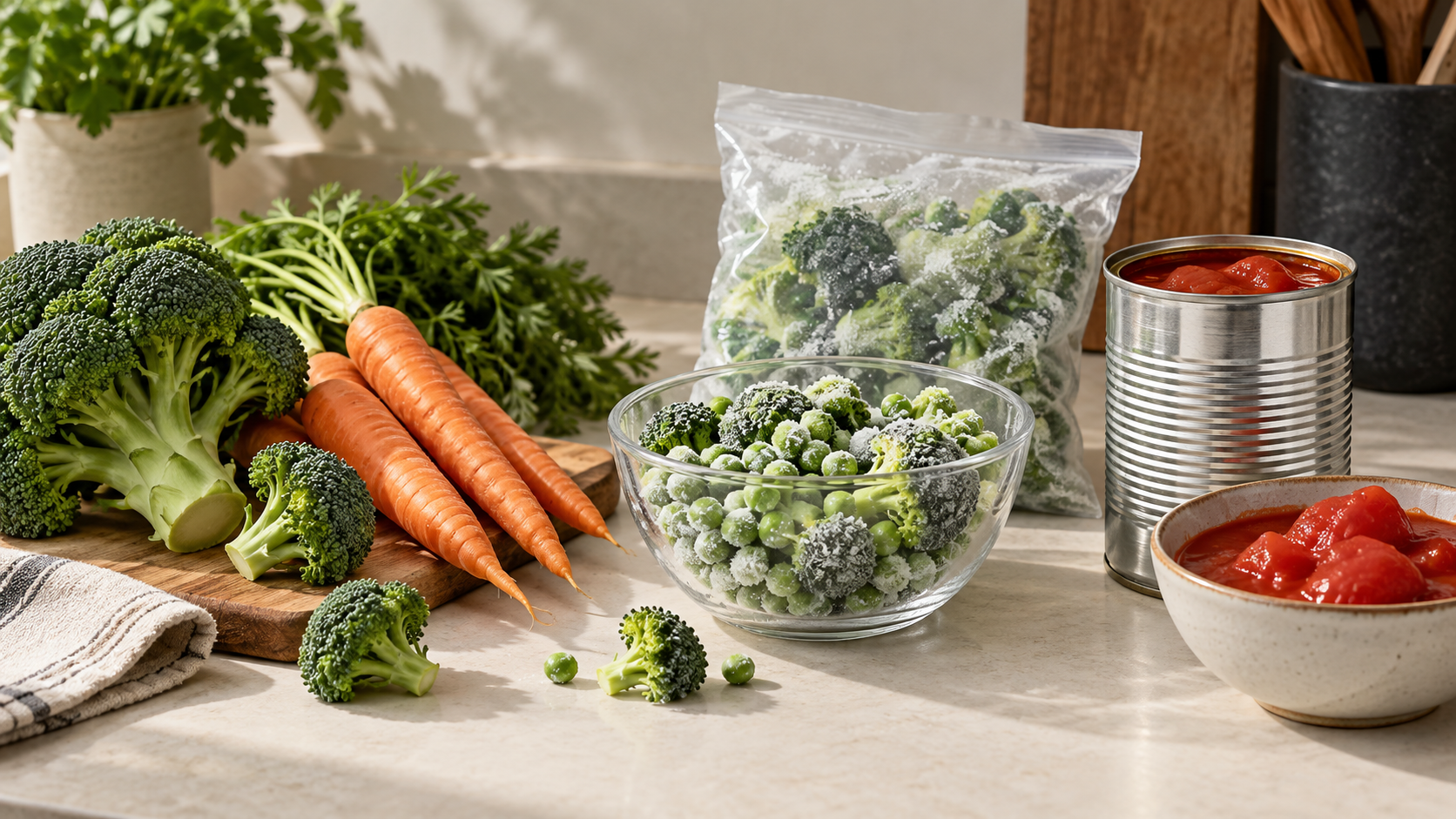
The preparation process differs between trimming fresh vegetables to eat and cooking frozen vegetables. USDA MyPlate includes fresh, frozen, canned, and dried forms of vegetables in the vegetable group. This can be used to mean there are storable options for people who cannot shop frequently. It does not mean that all forms have exactly the same nutrient values.
Distinguish between the purchased state and the state served at the table. A bag of raw vegetables, frozen vegetables without sauce, and frozen vegetable dishes with cream sauce have similar names but different ingredient compositions. The first thing to check is not just "Is it a vegetable?" but what else is included in the product. If you have allergies, you should also check the ingredients in sauces or seasonings.
What Is the Basis for Numbers Like 80g?
The UK NHS 5 A Day guidance describes 80g of fresh, frozen, or canned fruit or vegetables for adults as one portion. This is a standard used in UK fruit and vegetable intake guidance and is not a mandatory intake amount or a target portion for every reader’s meal. When reading the number for "one portion," check which country’s guidance it comes from.
The NHS advises choosing canned fruits and vegetables packed in water or natural juice without added salt or sugar. For vegetable products, you can check what is in the preserving liquid and sauce. Foods eaten as staples, like potatoes, are classified differently even within the same guidance. The fact that some foods are excluded from portion calculations should not be immediately interpreted as meaning they are bad foods.
When comparing labeled numbers, check if the same standards are used. One product may show values per 100g, another per package. Refer to the already published Reading Serving Sizes on Nutrition Labels for calculation methods. This article does not arbitrarily create new nutrition labels or rank foods. Without the actual product label, do not present an estimated nutrient amount as a confirmed value.
How to Compare Fresh, Frozen, and Canned?
| Form | Points to Check in Daily Life | Points to Check on Product |
|---|---|---|
| Fresh Vegetables | Time to prepare and planned eating schedule | Condition, washing and storage methods |
| Frozen Vegetables without Sauce | Freezer space and ability to take out needed amounts | Whether heating is required, cooking instructions |
| Frozen Products with Seasoning | Whether other side dishes and sauces overlap | Ingredients, allergies, nutrition labeling |
| Canned Vegetables | Ability to manage leftover amounts after opening | Preserving liquid, added salt/sugar, post-opening instructions |
This table is an editorial example for purchase selection. It is not an evaluation chart stating "fresh is always better" or "canned is always worse." Products that can actually be used may fit your lifestyle better than large packages that are often discarded. Price should be considered not only per package but also with the amount wasted and time needed for preparation. It does not preemptively conclude that a specific product is more economical.
How to Start Including Vegetables in Meals?
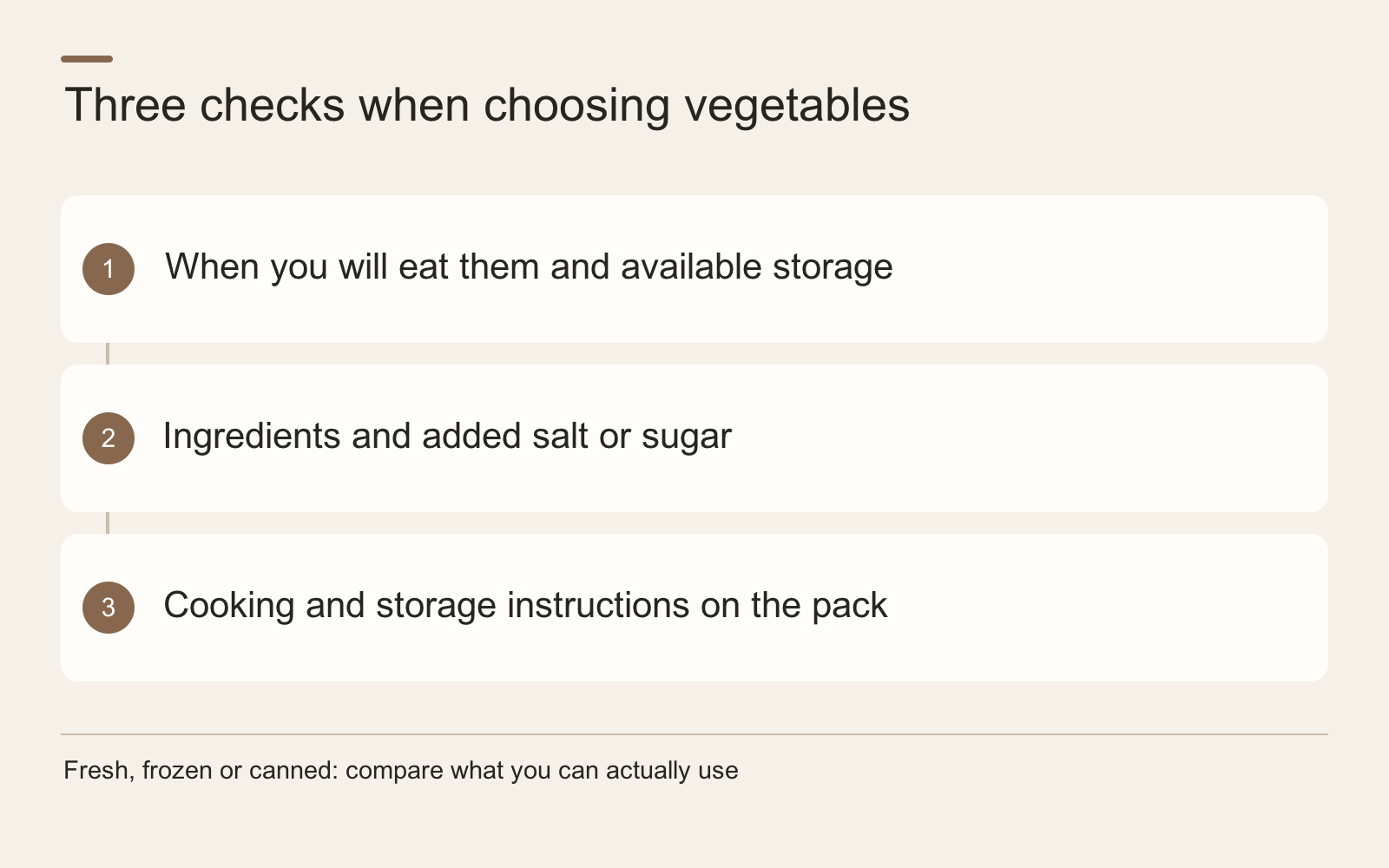
First, identify one situation where vegetables are omitted. Instead of "I should eat more vegetables," write actual conditions like "After work, I have no time to wash and prepare, so I skip side dishes." If you eat vegetables every morning, choose a form suitable for morning preparation; if you add them to an evening stir-fry, choose a form suitable for that dish. If your freezer is small, buying in bulk may not be the solution.
Second, decide on a method to use in a familiar meal. The following are examples of combinations, not nutritional prescriptions. On days you eat rice and tofu, you can add cooked vegetables, or use canned tomatoes in dishes that use tomatoes. Adding vegetables does not automatically mean removing staple foods or protein foods. If the product has sauce, check the existing composition before adding extra seasoning.
Third, store and cook according to packaging instructions. The FDA advises following cooking instructions for commercially frozen foods. "Frozen" does not mean sterilized or ready to eat. Even if you want to add to a salad, do not just thaw and use products intended for cooking. For first-time purchases, check if the instructions match those of previously eaten products.
Fourth, record leftover amounts and reasons for difficulty in use. Distinguish whether the taste was unsuitable, the large package was hard to divide, or cooking time was longer than expected. Adjust those conditions for the next purchase. Use records to find ways to continue various types of vegetables in actual meals rather than imposing a rule to eat the same vegetable every day.
FAQ: Frequently Asked Questions
Do Frozen Vegetables Have No Nutritional Value?
They are not viewed that way. Both MyPlate and NHS include frozen forms in vegetable choices. However, this does not conclude that specific products are always superior to fresh ones. Consider not only the form of the food but also the type and overall meal composition. Instead of searching for the "perfect vegetable," you can first review situations where vegetables are missing from actual meals.
Are Canned Vegetables Always Okay Before Opening?
Check the packaging storage instructions and condition. The FDA warns against bulging, leaking, or severely damaged cans. If the exterior is problematic, do not test safety by taste. After opening, leftover food may require different storage conditions than before opening, so check the product instructions. This article does not provide a uniform post-opening storage duration for all canned foods.
If I Increased Vegetables but Feel Discomfort, Should I Keep Increasing?
Consider the types and amounts eaten, cooking methods, and when discomfort began. If you have individual guidelines for potassium or dietary fiber due to kidney disease or other conditions, prioritize those guidelines. Do not ignore discomfort just because it is a "healthy diet." Avoid self-diagnosing recurring symptoms as a specific constitution. Meal Composition Guidance and Related Product Information provide other information paths and do not imply that specific products replace vegetable intake or resolve discomfort.
Reference Original Text
- USDA MyPlate, Vegetables: Food forms included in the vegetable group. Checked 2026-10-19.
- NHS, 5 A Day: what counts?: Context of 80g standard for adults and frozen/canned choices. Checked 2026-10-19.
- FDA, Are You Storing Food Safely?: Guidance on cooking frozen foods and damaged cans. Checked 2026-10-19.
jaimdang Korean Herbal Care
Online consultation and prescriptions tailored to your constitution.
View products