
How to Choose Restaurant Menus During Dieting to Reduce Burden?
When dining out during a diet, it is more practical to look at the actual composition and amount of food consumed rather than just the menu name. Instead of simply eliminating rice or noodles, check how the staple food, protein foods, and vegetables are included, and also consider the sauce and beverages together. There is no need to think that one meal out has ruined your plan. The goal is to make choices that allow you to return to your usual meals rather than drastically reducing the next meal.
What does one meal composition mean when dining out?
It is difficult to know the exact nutritional composition just from the restaurant menu name. Even for the same bibimbap, the amount of rice and vegetables, toppings, and seasoning can vary, and salads also differ depending on the dressing and additional ingredients. Rather than looking for a name that sounds healthy, it is useful to develop a habit of checking what the food in front of you consists of, which can be applied at various restaurants.
The enjoyment of eating and the purpose of the gathering are also part of the meal. Instead of making your favorite foods forbidden, consider whether you can adjust the side dishes or order quantity to share. Even if there are no exact numbers for every menu, choices are still possible. When information is lacking, rather than arbitrarily assigning calories, record the visible composition and the amount eaten.
How should you read the numbers and servings on menus?
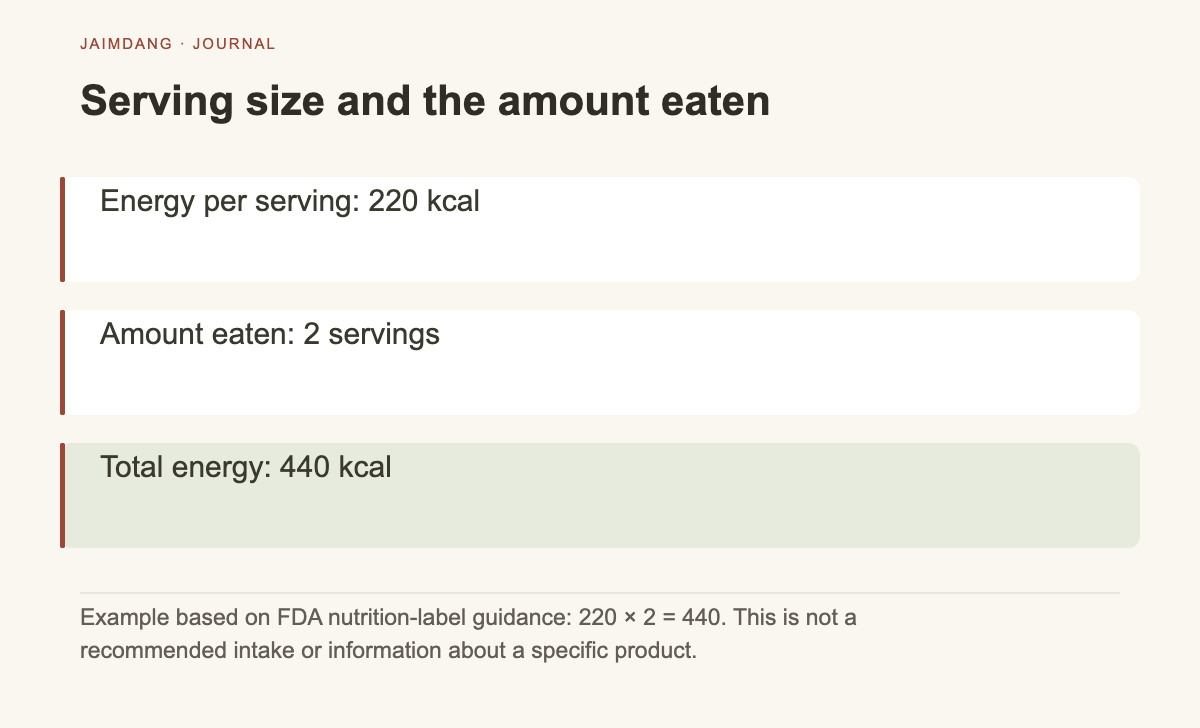
For example, if a fictional menu states 600 kcal per serving and two people each order the same menu, each order is 600 kcal. If one plate is shared, the amount depends on how it is divided. This example is a calculation to understand the labeling standard and is not the actual calorie or recommended amount of a restaurant menu. You should also check whether the value includes included side dishes and beverages.
The one serving mentioned by the restaurant does not necessarily mean the amount suitable for everyone. Consider your hunger, usual meal size, and remaining schedule together. For takeout food, check whether the nutrition label is based on the entire package or a portion. There is no need to force yourself to finish uneaten food, but leaving food should not be made a strict rule either.
How to compare frequently eaten menus?
| Menu Situation | Components to Check | Possible Choices When Ordering |
|---|---|---|
| Bibimbap / Rice Bowl | Rice, vegetables, protein toppings | Check if seasoning can be served separately |
| Soup with Rice / Stew | Solid ingredients, rice, broth | Hold off on adding extra salt before tasting |
| Noodle Dishes | Toppings and side dishes other than noodles | Choose protein and vegetable side dishes together |
| Sandwich / Salad | Bread, fillings, sauce | Check composition including sauce and beverage |
| Grilled Meat / Fish | Accompanying vegetables and staple food | Discuss appropriate order quantity with dining companions |
The above content does not rank which menu has fewer calories. It is difficult to compare accurately without knowing the actual cooking method and amounts. Choosing to reduce broth or sauce is not required at the same level for everyone. If you need to manage sodium or specific nutrients due to illness, apply the guidelines you have been given.
What are the steps from ordering to the next meal?
First, before going to the restaurant, check if you have not gone too long without eating. You do not have to skip all meals during the day just because you have a special meal out. Second, find where the staple food, protein foods, and vegetables are in the menu. Third, rather than automatically choosing drinks and additional menus, consider whether you really want them. Fourth, during eating, briefly check the taste, comfort, and fullness.
When sharing food with others, it is easier to gauge how much you have eaten if you serve yourself onto your plate. While eating and talking, plates may be continuously refilled, so rather than trying to plan all amounts exactly from the start, check your condition midway. Do not evaluate the meal solely by the next day’s weight; instead, see if you have returned to your usual lifestyle afterward.
The perspective of dietary self-care in traditional Korean medicine can be used to explain daily eating habits. However, it cannot be said that the traditional properties of specific foods offset the calories of dining out or reduce body fat. Recording recurring bloating or indigestion after eating together with food, time, and amount is more specific than making assumptions about constitution.
Frequently Asked Questions FAQ
Is choosing salad always advantageous?
It is difficult to judge by name alone. You may soon feel hungry if protein foods or staple foods are lacking, and the amount of sauce and additional ingredients may be large. Consider salad as part of one meal composition. Choosing another menu is not a wrong choice.
Should I fast the day after eating out?
Rather than eliminating meals extremely to compensate, think about returning to your usual meals. It is better not to treat weight on a daily basis like penalty points. If you repeatedly have difficult meals and severe guilt, you can seek help.
Does diet Korean herbal medicine compensate for dining out?
Taking medicine does not eliminate the calories of food or the body’s response. Do not arbitrarily change the dosage or add other products before or after dining out. The selection method in this article is not a guide promising the effect of medicine but a meal check method that can be used in daily life.
References
jaimdang Korean Herbal Care
Online consultation and prescriptions tailored to your constitution.
View products