
If You Sit for Long Periods Even on Exercise Days, What Should You Change First During Work?
You can set aside time for exercise while also creating opportunities to move during work. Try adding movement to existing schedules, such as taking a short walk after a meeting ends. Rather than enforcing the same break intervals for everyone or expecting weight loss simply by standing briefly, the starting point is to recognize prolonged sitting periods and choose feasible changes.
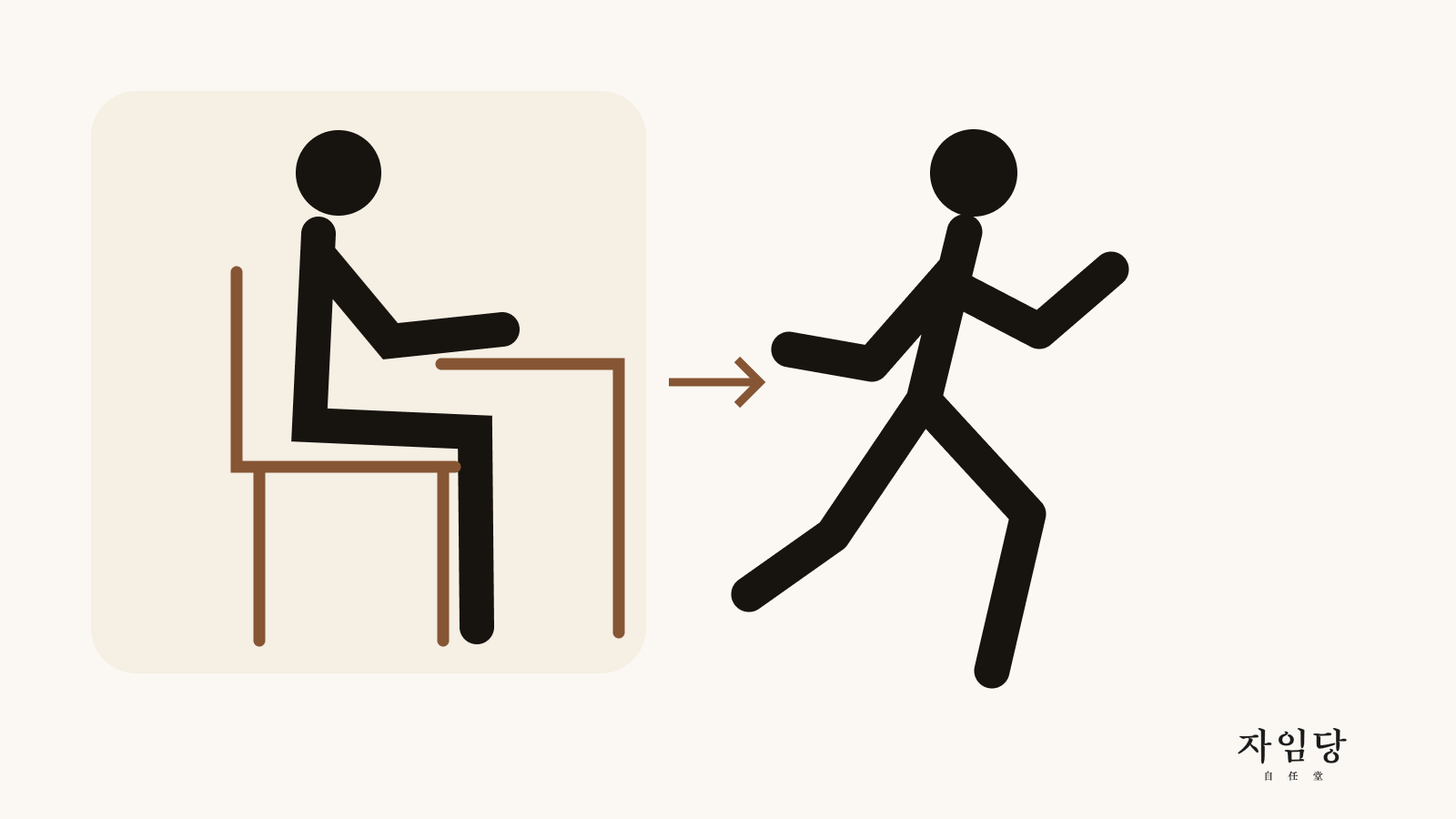
Definition: Exercise and sitting time are recorded separately
The WHO includes not only exercise but also activities involving body movement such as transportation, work, and household chores under physical activity. Sedentary behavior refers to low-energy expenditure activities performed while awake in sitting, reclining, or lying postures. Even on days when one goes to the gym, most remaining time may be spent sitting, so separating these two categories clarifies the daily pattern.
This does not mean that all sitting time is a bad choice. There are times when focused work or rest is necessary, and situations where choices are limited due to mobility or disabilities. The goal is not to create a score evaluating lifestyle but to find segments in your environment that can be changed. Standing alone is not presented as the sole solution for those who cannot work standing up.
Metrics: Distinguishing weekly exercise recommendations from brief movements
The CDC recommends adults engage in at least 150 minutes of moderate-intensity aerobic activity per week and muscle-strengthening activities on two or more days weekly for overall health. This is a general guideline and should be adjusted based on individual conditions. Light movements during work breaks are not counted entirely as moderate-intensity exercise. Record the intensity and duration of activities separately.
The WHO encourages increasing physical activity and limiting sedentary time but does not prescribe a single break interval or weight loss amount applicable to all workers. It does not promise that standing up every exact number of minutes will result in a specific weight loss. The amount of activity needed for weight management varies individually, so do not adopt another person’s step count as your own prescription.
Comparison: Find possible movements before changing schedules
| Work Situation | Possible Change | Constraints to Check |
|---|---|---|
| After a long online meeting ends | Move briefly before next task | Whether the next task follows immediately |
| Going to get water | Go and get it yourself within your abilities | Whether the route is safe |
| Sitting down immediately after lunch | Light walking as conditions allow | Whether pain or discomfort occurs |
| Work with limited mobility | Consult on possible posture changes and movements | Work safety regulations and physical condition |
This table provides examples to help recall implementation scenarios. It is not a chart proving weight loss effects for those who achieve specific counts. If standing for long periods causes discomfort, adjust posture and activity rather than simply replacing all sitting time with standing time. Exercise plans can be reviewed separately in Korean Medicine Weight Management and Exercise Guide.
Procedure: How to add movement into daily gaps
First, note the work segment where you sit the longest. If tracking the entire day by minutes is difficult, mark it by schedule name such as ‘morning meeting to lunch.’ Also note any exercise time already performed to avoid confusing lack of exercise with prolonged sedentary time.
Second, choose one segment that is easy to change. Use natural transition points like meeting end or organizing printouts rather than strong alarms that interrupt work. First confirm whether the environment allows movement from your seat, and decide on a method that does not interfere with colleagues’ work or safety.
Third, try comfortable movements and note your body’s response. If unfamiliar with activity or if you have illness or pain, consult healthcare professionals about the range. If sudden chest pain or severe shortness of breath occurs, stop immediately without trying to meet goals and seek emergency medical help immediately. Enduring discomfort is not a measure of success.
Fourth, check whether you did it or not and the reasons. If you could not execute due to schedule, try changing the segment to add movement rather than concluding lack of willpower. Reviewing after one week is possible, but this week is an editorial example and not a guaranteed period for effects. Do not immediately attribute causality between short-term weight changes and how often you make the change.
In Korean traditional medicine, activity, fatigue, and digestive status are observed together and explained with traditional concepts such as qi deficiency and qi stagnation. These are not converted into modern numerical values like calorie consumption. If you feel unusually tired or experience repeated pain when moving, explain activity records and symptoms together to identify causes. Do not self-prescribe exercise type and amount based solely on constitution names.
FAQ: Frequently Asked Questions
If I exercise enough, do I not need to consider sitting time?
Both items can be considered together. While maintaining the fact that you exercised, check if there is room to change prolonged sedentary segments during the day. This does not mean undervaluing exercise or eliminating all rest time.
Is standing at work the same as walking?
They are not calculated as the same activity. Changing posture and moderate-intensity aerobic activity should be distinguished. Standing alone is not promised as a weight loss method; construct possible movements and regular exercise according to your condition.
How do I connect this with a weight management plan?
Consider diet, sleep, and activity together, but rather than trying to fix everything at once, start with changes you can sustain. Refer to Maintenance Record Comparison and Gongbihwan Program Guide. Program use is judged after confirming individual condition, and daily movement does not replace medical consultation or treatment.
References
- WHO, Physical activity: Definitions of physical activity and sedentary behavior, recommendations to limit sedentary time. Accessed 2026-10-14.
- CDC, Physical Activity and Your Weight and Health: Adult activity recommendations and individual differences. Document dated 2026-04-07, accessed 2026-10-14.
- Korean Society of Korean Medicine for Obesity, Pathophysiology of Obesity According to Causes in Korean Medicine: Background of traditional pathophysiological explanations. Not used as evidence for weight loss effects by activity level.
- NHS, Chest pain; NHS, Shortness of breath.
jaimdang Korean Herbal Care
Online consultation and prescriptions tailored to your constitution.
View products