
Changing Your Diet After Milk Causes Discomfort: What Should You Record from a Sikchi Perspective?
Contents

Before Removing Milk, Observe What Changes in Your Meals
If you feel discomfort after drinking milk and want to exclude it from your diet, examine the cause and meal composition separately. When applying the traditional Korean medicine (hanbang) sikchi (dietary care) perspective on food to daily records, it is better to specifically note the actual foods eaten and the changed meal rather than just labeling it as "something doesn’t agree." However, lactose intolerance and milk allergy are different issues, and the term sikchi cannot be used to assess allergy risk.
In the Zang Qi Fa Shi Lun chapter of the Huangdi Neijing · Suwen, there is a phrase: “Five grains nourish, five fruits assist, five livestock benefit, five vegetables fill.” This is a traditional perspective dividing the roles of grains, fruits, animal products, and vegetables in meals. It is not a statement proposing modern nutrient ratios or milk substitute prescriptions. In this article, it is read as a starting point to consider the entire meal when excluding one item. Original Suwen text comparison, chapter 22
For example, if a person who used to have milk and bread for breakfast stops drinking milk but almost skips breakfast altogether, the record should note not only “stopped milk” but also the actual remaining meal. Conversely, if other drinks or snacks increase, that change should also be recorded. Removing a specific food does not necessarily mean a balanced diet or weight loss. The classical food categories are not directly matched one-to-one with today’s recommended intake amounts.
What Is the Difference Between Lactose Intolerance and Milk Allergy?
Modern distinctions are confirmed by separate evidence. The NIDDK explains lactose intolerance as a problem digesting lactose, the sugar in milk, and milk allergy as an immune reaction to milk proteins. Lactose intolerance may cause abdominal bloating, gas, diarrhea, etc., but you should not diagnose yourself from symptoms alone. Severe milk allergy can be life-threatening. NIDDK Symptoms and Causes Information
“Lactose-free” does not mean the product is free of milk proteins. If you have or suspect a milk allergy, do not choose products based solely on this label. The FDA explains that casein and whey are milk proteins. Check the full ingredient list and allergy labeling on products, and if diagnosed, follow personalized management guidelines. FDA Food Allergy Labeling Information
What Do the Numbers in the Record Mean?
This record has 3 columns, and the comparison table below has 5 categories. These are editorial organizing choices, not test frequencies, safe amounts of milk or symptom thresholds. Identical columns can contain different information when the product or accompanying foods differ.
Record amounts and times from the label and your recollection where possible. Distinguish the container’s full volume from what you actually drank; do not count leftovers as consumed. Mark an unknown product or time as unknown. This article does not prescribe a number of diary days for diagnosis. Discuss observation and assessment with a clinician, and do not consume a suspected food again to create a record.
How Can Meal Records Be Kept Separate from Allergy Assessment?
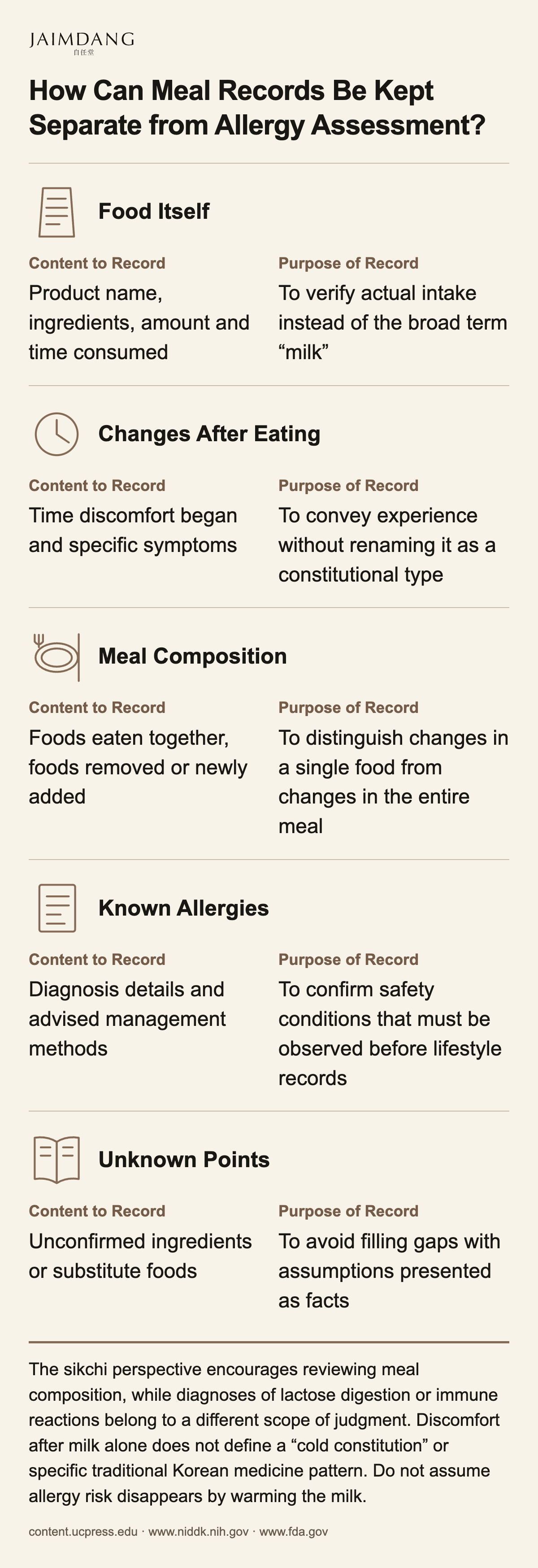
The table below is an example record created by the editorial team. It is not a classical diagnostic chart or allergy self-test.
| What to Check | Content to Record | Purpose of Record |
|---|---|---|
| Food Itself | Product name, ingredients, amount and time consumed | To verify actual intake instead of the broad term “milk” |
| Changes After Eating | Time discomfort began and specific symptoms | To convey experience without renaming it as a constitutional type |
| Meal Composition | Foods eaten together, foods removed or newly added | To distinguish changes in a single food from changes in the entire meal |
| Known Allergies | Diagnosis details and advised management methods | To confirm safety conditions that must be observed before lifestyle records |
| Unknown Points | Unconfirmed ingredients or substitute foods | To avoid filling gaps with assumptions presented as facts |
The sikchi perspective encourages reviewing meal composition, while diagnoses of lactose digestion or immune reactions belong to a different scope of judgment. Discomfort after milk alone does not define a “cold constitution” or specific traditional Korean medicine pattern. Do not assume allergy risk disappears by warming the milk.
Meal Records Can Start with Three Columns
In the first column, write what was actually eaten. Keep photos of packaging or ingredient lists to verify product names, and note foods eaten together and amounts. If exact amounts are not remembered, mark them as estimates.
In the second column, write what changed in the meal. Specify whether the entire breakfast decreased after excluding milk, or if other drinks or snacks increased. This article’s sikchi record method focuses on how the meal changed rather than judgments such as “I showed good restraint.”
In the third column, write the discomfort as a fact. Instead of “does not agree with the body,” write something like “stomach bloated shortly after eating.” Do not confirm causes based on this alone, and do not intentionally reconsume suspected allergenic products to verify. If severe reactions occur, do not delay medical consultation to complete records.
These three columns are not a list to restrict foods further unconditionally. For foods already advised to avoid by medical professionals, follow those guidelines while also reviewing the meal composition after restriction. If food groups must be excluded long-term, seek help regarding nutritional intake.
Frequently Asked Questions
Do I Have to Completely Stop Dairy to Practice Sikchi?
The quoted classical phrase is not a guideline forbidding dairy for everyone. Confirm the actual cause of discomfort and allergy status, and review necessary restrictions and meal composition according to individual circumstances.
Is Lactose-Free Milk Safe for Milk Allergy?
Lactose and milk proteins are different. Allergy safety cannot be judged by lactose-free labeling alone. If already diagnosed, follow the advised food choices and emergency response guidelines.
If I Feel Better After Removing Milk, Does That Mean I Found the Cause?
Meal amounts, accompanying foods, and daily routines may also have changed. Record experiences but do not conclude a diagnosis. Do not attempt to reproduce reactions by re-consuming suspected foods.
Which Substitute Drink Is Best?
This article does not designate any specific product as a universal alternative. Choices vary depending on ingredients to avoid and actual meal composition. Do not assume similar-named drinks have the same ingredients.
Today, try writing next to “Did you drink milk?” the question “What else was eaten with that meal?” The direction of sikchi records proposed here is to observe the entire meal rather than fixate on the goodness or badness of a single food.
This article provides general health information and does not replace individual diagnosis or allergy treatment.
Related reading: building a breakfast
If you take Korean herbal medicine, check the product information alongside your actual prescription instructions. Do not change how you take it based on product information alone.
jaimdang Korean Herbal Care
Online consultation and prescriptions tailored to your constitution.
View products