
If You've Been Notified of High Cholesterol in Your Health Check-up — The Story of Cheongmaekhwan

The day you first see red text on your check-up results, reactions usually fall into two categories: "What's the problem if I have no symptoms?" and "Do I have to take medication for the rest of my life now?" Since cholesterol doesn't notify you until you're sick, all you're left with are numbers, and numbers alone don't tell you what to do.
It's not uncommon. According to the 「Dyslipidemia Fact Sheet in Korea 2024」 (Dyslipidemia Fact Sheet in Korea 2024), compiled by the Korean Society of Lipid and Atherosclerosis using data from the Korea National Health and Nutrition Examination Survey (KNHANES), the prevalence of hypercholesterolemia (total cholesterol ≥ 240 mg/dL or taking lipid-lowering agents) among adults aged 20 and over was 27.4% in 2022. This is more than a 2.5-fold increase in 15 years, from 8.8% in 2007. Expanding to all dyslipidemia, the average prevalence from 2016-2022 was 40.9-47.1%, meaning one in two adults is affected depending on the criteria.
The Four Numbers on Your Results Speak Different Languages
Lipid tests usually include four items. Total cholesterol is considered appropriate below 200 mg/dL, borderline between 200-239, and high at 240 or above. HDL cholesterol is low below 40 mg/dL and high at 60 or above, so the direction is opposite. LDL cholesterol has a baseline of below 130 mg/dL, and triglycerides are appropriate below 150, borderline between 150-199, and high at 200 or above.
There's a common misunderstanding: even if total cholesterol is within the normal range, if LDL or triglycerides are high, it still counts as dyslipidemia. This is why it's difficult to feel reassured by looking at only one item.
The lipid distribution in Koreans also has its characteristics. A comparative study of domestic and international guidelines published in 『Korean Journal of Family Medicine』 summarized that Koreans tend to have lower total cholesterol and LDL than Westerners, but higher triglycerides, and a higher prevalence of low HDL cholesterolemia. Reading the same results solely by Western standards can lead to missing items.
Even with the Same LDL Level, Target Levels Differ
What's crucial in management is not the number itself, but the individual's risk level. The Korean Society of Lipid and Atherosclerosis's 「이상지질혈증 진료지침 제5판」(5th Edition of the Guidelines for the Management of Dyslipidemia) divides risk into four stages, setting different LDL target levels:
- Very high-risk group (coronary artery disease) — LDL below 55 mg/dL
- High-risk group (atherosclerotic ischemic stroke, carotid or peripheral artery disease) — below 70 mg/dL
- Moderate-risk group (2 or more major risk factors) — below 130 mg/dL
- Low-risk group (1 or fewer major risk factors) — below 160 mg/dL
Major risk factors include smoking, hypertension, low HDL cholesterol (below 40 mg/dL), family history of premature coronary artery disease, and age (men 45 years or older, women 55 years or older). If HDL is 60 mg/dL or higher, it is considered a protective factor, and one risk factor is subtracted from the count.
Diabetes is handled separately. If the duration of illness is less than 10 years and there are no other risk factors, the LDL target is below 100 mg/dL. If it's 10 years or more, or accompanied by risk factors, it's below 70. If there is target organ damage or 3 or more risk factors, selectively consider below 55. An LDL of 140 means something entirely different for a non-smoking low-risk individual in their 40s compared to a diabetic patient of 10 years.
When Medication Comes First and When Lifestyle Comes First
Guidelines cross-reference risk level and LDL concentration to divide into sections for lifestyle modification only, sections to consider medication, and sections to start immediately. For low-risk and moderate-risk groups, lifestyle modification is prioritized, followed by re-evaluation after a certain period. For very high-risk groups who already have cardiovascular disease, lifestyle modification and drug therapy are started concurrently. If triglycerides exceed 500 mg/dL, the sequence is accelerated due to the risk of acute pancreatitis.
The evidence for statins is robust. A 2013 Cochrane Review compiled 18 randomized controlled trials involving 56,934 people on primary prevention, reporting an odds ratio of 0.86 for all-cause mortality and a risk ratio of 0.75 for fatal and non-fatal cardiovascular events. In terms of magnitude, this means 18 out of 1,000 people avoid a major cardiovascular event over 5 years of use, and no evidence of increased serious harm was found.
There is a crucial point that must be addressed here: If you have already been prescribed and are taking statins, do not stop them arbitrarily. Whether you want to start Hanbang medicine or your numbers have improved, the decision to stop or reduce dosage must be made in consultation with the prescribing doctor. Especially in very high-risk groups, stopping medication itself reverses the risk.
What is the Extent of Evidence for Diet and Exercise?
Lifestyle modification also involves numbers. The Therapeutic Lifestyle Changes (TLC) suggested by the guidelines are saturated fatty acids within 7% of daily energy intake, total fat within 30%, carbohydrates within 65%, and dietary fiber 25g or more; trans fats should be "as little as possible." Exercise is recommended as aerobic exercise for 30-60 minutes a day, 5 or more days a week, and resistance exercise 2-3 days a week.
The evidence for limiting saturated fat is summarized in a 2020 Cochrane Review. Compiling 15 RCTs involving 56,675 people, the results showed that reducing saturated fat intake decreased cardiovascular events by 17% (risk ratio 0.83, 95% confidence interval 0.70-0.98). However, there was no clear difference in all-cause mortality (0.96) and cardiovascular mortality (0.95), and the benefit appeared when reduced saturated fat was replaced with polyunsaturated fat or carbohydrates. This means that what you replace it with is as important as what you remove.
It's better to honestly assess the effect size of exercise. A meta-analysis published in 『Sports Medicine』 in 2024 synthesized 148 RCTs involving 8,673 people, reporting that exercise training lowered LDL by an average of 7.22 mg/dL (-6.3%), triglycerides by 8.01 mg/dL (-11.7%), and increased HDL by 2.11 mg/dL (+3.5%). The response in triglycerides was the largest, and the same numbers indicate that it is difficult to rely solely on exercise as a means to bring LDL down to target levels.
Hanbang Views It Through the Framework of Dam-eum and Eo-hyeol
Hanbang (Korean Medicine) does not have a separate category for blood lipids. Instead, it approaches the issue through the frameworks of dam-eum (痰飮) and eo-hyeol (瘀血). Dam-eum refers to a state where body fluids, not properly utilized due to impaired digestion, absorption, and fluid metabolism, accumulate in the body. Eo-hyeol refers to stagnant blood. Oily foods, excessive alcohol consumption, and a sedentary lifestyle are considered conditions that lead to dam-eum. These names are frameworks for categorizing body conditions, not disease diagnoses.
It is appropriate to be honest about the level of evidence. A 2013 Cochrane Review compiled studies on Hanbang medicine for hypertriglyceridemia but was limited to 3 RCTs involving 170 people, noting that it was difficult to draw definitive conclusions due to unclear risk of bias and lack of long-term results. Evidence for individual ingredients is somewhat more accumulated. A 2018 『Phytomedicine』 meta-analysis on berberine from Hwangnyeon (Coptis chinensis) reported reductions in total cholesterol, LDL, and triglycerides in 16 RCTs involving 2,147 people, but the authors explicitly stated that interpretation should be cautious due to high clinical heterogeneity and risk of bias.
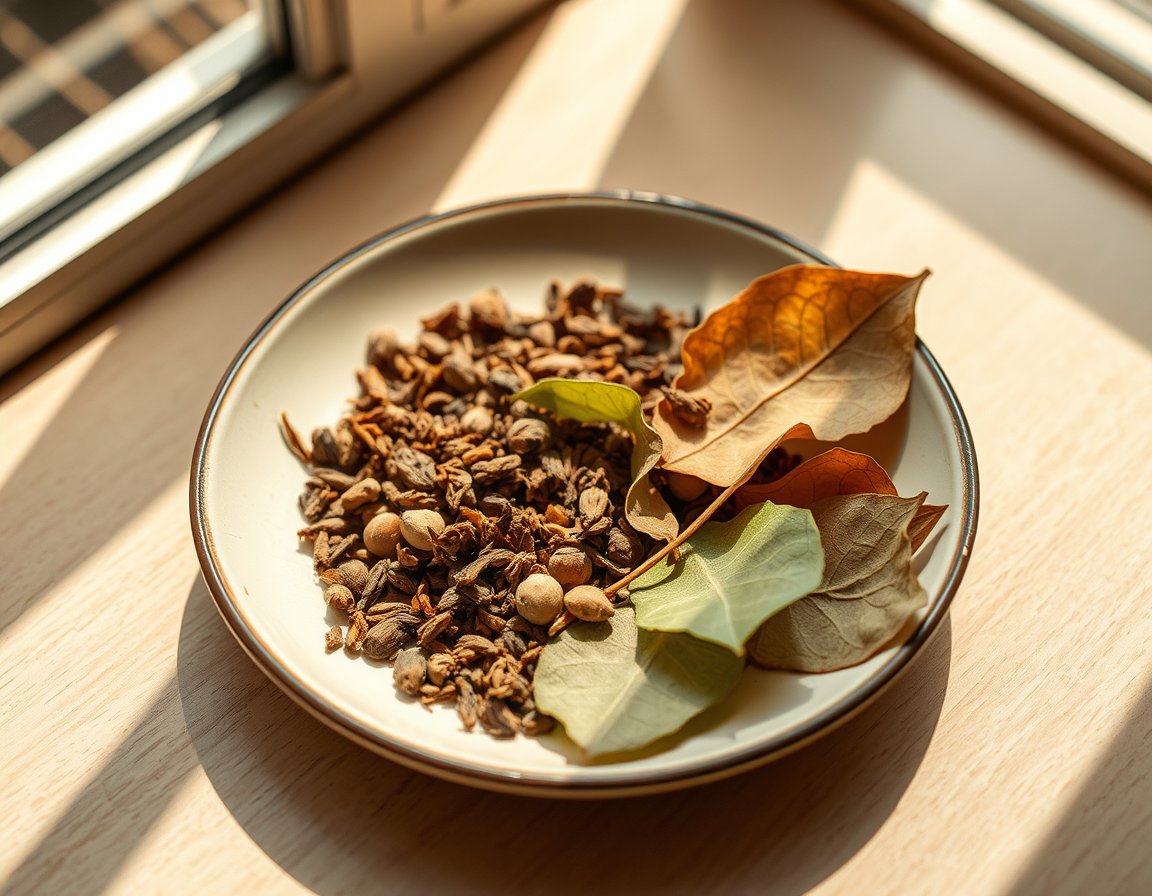
This is where Cheongmaekhwan (淸脈丸) is positioned. It is a Hanbang doctor-prescribed medicine directly formulated by jaimdang Korean Medicine Clinic, referencing classical prescription principles and modern pharmacological research. It combines 10 types of herbs, including Hwangnyeon (Coptis chinensis), Taeksa (Alisma orientale), Injin-ho (Artemisia capillaris), Sansa (Crataegus pinnatifida), Gyeolmyeongja (Cassia tora), Hasu-o (Polygonum multiflorum), Dansam (Salvia miltiorrhiza), Eunhaengyeop (Ginkgo biloba leaf), Samchil (Panax notoginseng), and Gamcho (Glycyrrhiza uralensis), based on the Gunsinjwasa (君臣佐使) principle. Preparation takes place at the off-site herbal dispensary in Paju, Gyeonggi Province. Indicator components of standardized herbs are quantified by HPLC, and after self-inspection for heavy metals and residual pesticides, the herbs are decocted using a standardized process that controls temperature, time, and pressure. Each batch undergoes quality inspection, and a lot number is affixed to each stick pouch. The process is detailed in the article [Off-site Herbal Dispensary and Hanbang Medicine Quality](/en/journal/wonoe-tangjeon-quality).
The decision on whether and for how long to take it is made after a consultation and review by a Hanbang doctor. If you are taking statins, ezetimibe, or anticoagulants, you must inform us of the ingredient names and dosages during the consultation, and discussion with your treating physician is also necessary. The procedure is outlined in [Guidance on Non-face-to-face Hanbang Medicine Prescription](/en/journal/bidaemyeon-hanyak-guide).
Four Things to Re-check on Your Results
- Read the four items separately — Don't just look at total cholesterol; compare LDL, HDL, and triglycerides against their respective baselines.
- Count your major risk factors — Smoking, hypertension, HDL below 40, premature family history, age (men 45, women 55). The number changes your target level.
- Check the duration of your diabetes — 10 years is the baseline. For the same diabetes, the target LDL drops from 100 to 70.
- Write down all medications you are currently taking — Including ingredient names, dosages, and start dates. This is the starting point for discussion, not arbitrary discontinuation.
References
- 한국지질·동맥경화학회 진료지침위원회 (Korean Society of Lipid and Atherosclerosis Clinical Practice Guideline Committee), 「이상지질혈증 진료지침 제5판」 (5th Edition of the Guidelines for the Management of Dyslipidemia), 2022
- Korean Society of Lipid and Atherosclerosis, Dyslipidemia Fact Sheet in Korea 2024 (based on KNHANES 2007–2022), 2024
- Taylor F et al., Statins for the primary prevention of cardiovascular disease, 『Cochrane Database of Systematic Reviews』, 2013
- Hooper L et al., Reduction in saturated fat intake for cardiovascular disease, 『Cochrane Database of Systematic Reviews』, 2020
- 조영규 외 (Cho Young-kyu et al.), 「국내외 이상지질혈증 치료지침의 비교 및 한국인에서 치료지침의 적절성」 (Comparison of Domestic and International Dyslipidemia Treatment Guidelines and Their Appropriateness for Koreans), 『Korean Journal of Family Medicine』 31(3), 2010
*This article aims to provide information on dyslipidemia and the Hanbang perspective and does not guarantee the diagnosis or treatment efficacy of specific diseases. Cheongmaekhwan is a Hanbang doctor-prescribed medicine whose use is determined through a Hanbang doctor's consultation and prescription, and individual responses may vary. If you are already taking prescribed lipid-lowering agents, do not stop them arbitrarily; please consult with your treating physician.*
jaimdang Korean Herbal Care
Online consultation and prescriptions tailored to your constitution.
View products